
Concrete Superintendent Jobs: What They Pay in 2026 and How to Get One
Concrete superintendents who run self-perform structural work earn roughly $80,000 to $130,000 a year, based on what TBG sees in active searches. Public salary sites show a lower blended average, about $68,000 at Salary.com and $74,000 at ZipRecruiter, because they mix residential and light commercial crews in with heavy structural pours. If you run formwork, rebar, and structural concrete and you want a stronger seat with a better builder, this page shows what the role really pays on premium self-perform work, what it takes, where the work is, and how to get in front of the right contractors without broadcasting your search.
You run the work. We run the search. TBG has recruited in construction since 1967, our service is free to candidates, and contractors pay our fees. You can see open concrete superintendent jobs or send your details in confidence any time.
Last updated: August 2026
How much do concrete superintendent jobs pay?
On self-perform structural concrete, superintendents earn about $80,000 to $130,000 a year. That range comes from TBG’s own searches, not a job board, and it reflects the supers who lead their own crews on commercial, industrial, and heavy civil pours.
Public salary sites run lower because they blend the whole title together. Salary.com puts the national average at $67,776, with most of the field between $61,548 and $72,796 as of July 2026. ZipRecruiter lists an average of $74,022 and a top end near $113,000. The U.S. Bureau of Labor Statistics does not track concrete superintendents as their own category. The closest federal number is first-line supervisors of construction trades, with a median of $76,760 in the May 2023 wage data.
Those averages fold in residential slab crews and light commercial work. Strip that out and look only at self-perform structural concrete on a real schedule, and the pay moves up fast.
Where you land depends on four things: the size of the pours you run, whether the contractor self-performs, your market, and how much of the schedule sits on your shoulders. The top of the range goes to supers running large commercial, industrial, or infrastructure concrete on tight dates. On advanced manufacturing, data center, and heavy civil work, experienced concrete supers clear the high end, and per diem, a vehicle allowance, and bonus land on top of base.
For contractor numbers by role and region, the 2026 Construction Salary Survey breaks out base, bonus, vehicle, and per diem the way contractors actually pay, not the way job boards guess.
What does a concrete superintendent do?
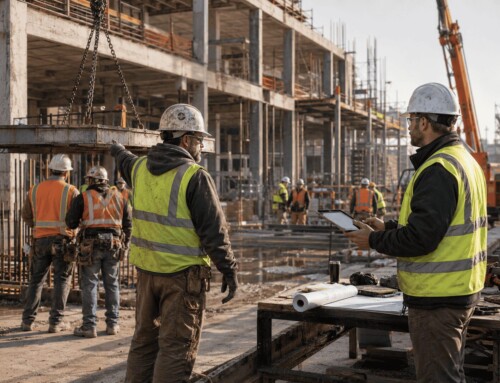
A concrete superintendent owns the concrete scope in the field. You plan and run formwork, rebar, embeds, and pours, and you keep the crews, pumps, and inspections lined up so the schedule holds.
The job lives at the front of the critical path. Foundations, slabs, decks, tilt panels, and structural concrete set the pace for everything that follows. When concrete slips, the whole job slips. That is why contractors pay a premium for a super who hits pour dates without cutting corners on quality or safety.
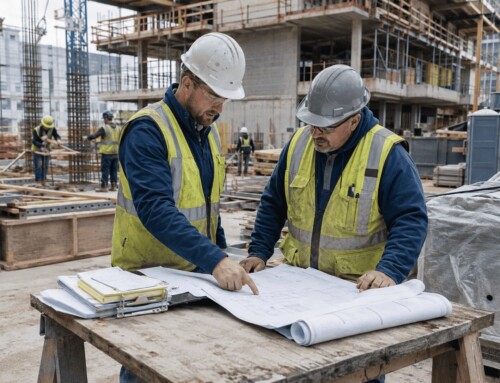
Day to day, you coordinate with the project manager, the ready-mix supplier, the pump operator, testing labs, and the trades stacked behind you. You read the drawings, catch the conflicts before they hit the field, and make the call when weather or a late delivery threatens a pour.
Concrete superintendent job requirements
Most contractors want five to ten-plus years in concrete construction, with real time leading self-perform crews. A superintendent title on subcontracted work does not carry the same weight as running your own pours.
Common requirements include:
- Proven experience with structural concrete, formwork systems, and large pours
- A track record hitting pour schedules on commercial, industrial, or civil projects
- OSHA 30 and a clean safety record
- Comfort reading structural drawings and coordinating with PMs, suppliers, and inspectors
- Willingness to travel or relocate for the right project on some roles
A degree helps on paper, but field results matter more. Many of the strongest concrete superintendents came up through the trade, and contractors know it. If you can run the work, you can compete for these jobs. If you are still working up to the seat, general foreman pay shows the step just below it on the path.
Where are concrete superintendent jobs in demand?
Demand is strongest where self-perform concrete meets a heavy schedule. Advanced manufacturing plants, data centers, warehouses, water and wastewater projects, and heavy civil work all move on concrete, and contractors are short on supers who can lead it.
Reshoring and factory construction have pushed a wave of large concrete packages into the market. The AGC of America and Sage 2026 Construction Hiring and Business Outlook, published in January 2026, found contractors expecting growth in data center work by a net 57 percent and in manufacturing by a net 15 percent, two of the most concrete-heavy categories on the board. That work rewards superintendents who can staff a crew, run several pours a week, and keep quality tight at scale.
Self-perform general contractors and specialty concrete firms are the two main employers. Both compete for the same short list of proven field leaders, which is good news if you are one of them.
Self-perform concrete: why it changes the job
Self-perform concrete puts the risk on the contractor’s own payroll. There is no sub to absorb a blown pour or a labor shortage. The superintendent is the risk.
That raises the bar. On self-perform work, you own the crew, the productivity, the rework, and the safety outcomes directly. Contractors hiring for these seats screen harder, because a weak hire shows up fast in the numbers.
It also raises the pay. If you have run self-perform concrete and hit your schedules, you are in the group contractors chase, and you should be paid like it. That is the difference between a superintendent who manages a sub and one who owns the work.
How to land a concrete superintendent job
The best concrete superintendent jobs rarely hit the job boards. Contractors bring them to a recruiter first, quietly, because they do not want to tip off competitors or their own bench.
That is where TBG comes in. We recruit only in construction, we know which contractors are hiring concrete leadership right now, and we represent you confidentially so your current employer never finds out you are looking. Working with us is free for you, and contractors pay the fees.
Start by telling us the markets and project types you want when you submit your resume confidentially. It helps to know your number first, so check the construction superintendent pay breakdown before you sit down to negotiate.
Hiring a concrete superintendent?
If you run a self-perform contractor and need a concrete superintendent who hits pour dates and owns the risk, that is our lane. See how concrete construction recruiting works, or contact TBG to start a search. We identify every relevant contractor and the qualified professionals inside them, so you see the market, not just the people already looking.
Concrete superintendent salary FAQ
What is the average concrete superintendent salary?
Salary sites put the national average between $67,776 (Salary.com, July 2026) and $74,022 (ZipRecruiter). On self-perform structural work, TBG sees $80,000 to $130,000 in active searches, since those numbers reflect real self-perform scope instead of a blended field average.
Do concrete superintendents make more than general superintendents?
Usually no. A general superintendent runs the whole job and sits above the concrete super. A strong concrete super on self-perform structural work can still out-earn a general super on smaller projects, because the pour risk and the schedule pressure are higher.
Which markets pay concrete superintendents the most?
Data centers, advanced manufacturing, and heavy civil pay the top of the range, especially with per diem and travel added on top of base. Reshoring and factory builds have pushed more of this concrete-heavy work into the market since 2025.
Do I need a degree to be a concrete superintendent?
No. Most contractors weigh field results over a degree. Years running self-perform crews, a clean safety record, and a track record hitting pour dates carry more than a diploma.
Run the pours, hit the dates, own the risk. That is the concrete superintendent contractors pay for, and it is the one we get paid to find.