
The Top 10 Construction Technology Trends Contractors Must Staff For in 2026
Construction technology trends in 2026 are not just about new tools.
They are about execution.
A contractor can buy better software, add drones, test AI, invest in BIM, or build a digital twin. None of it matters if the people running the work cannot turn that technology into cleaner schedules, better coordination, safer jobsites, and stronger margins.
That is the real issue for construction leaders in 2026.
The construction industry is still dealing with tight labor, rising pay pressure, stretched field teams, and more complex projects. The AGC and Sage 2026 Construction Hiring and Business Outlook reported that 63% of firms expect to increase headcount in 2026, while 82% report difficulty filling hourly craft roles and 80% report difficulty filling salaried openings.
Technology is becoming part of the answer. It is not the whole answer.
Contractors still need project executives, superintendents, project managers, estimators, safety leaders, and VDC teams who know how to lead people, control risk, and use better information in real time.
For hiring managers, this is no longer just an operations issue. It is a construction recruiting issue. Contractors that cannot hire leaders with stronger technical fluency will struggle to turn these tools into real project results.

Why Construction Technology Matters More in 2026
The construction firms that gain ground in 2026 will not be the ones with the longest software list.
They will be the ones that connect technology to field discipline.
That means:
- Better preconstruction data
- Cleaner handoffs from estimating to operations
- Stronger BIM and VDC coordination
- Faster field reporting
- Better safety visibility
- Tighter cost control
- More reliable closeout and turnover
Technology can show where a project is drifting. It cannot force a superintendent to fix the sequence. It can flag a cost issue. It cannot negotiate a clean recovery plan. It can support recruiting. It cannot replace judgment.
That is why the next wave of construction technology will raise the value of strong construction leaders.
Top 10 Construction Technology Trends for 2026
1. AI in Estimating, Project Controls, and Documentation
AI is already moving into construction offices, estimating departments, and project controls teams.
The 2026 Construction Hiring and Business Outlook found that many contractors are boosting AI investment to improve accuracy and productivity. The report shows AI being used across office work, estimating, design, preconstruction, recruiting, training, and HR.
This does not mean AI is replacing estimators or project managers.
It means the best people will have better tools.
AI in construction can help teams review documents, compare bid history, draft first-pass RFI responses, flag cost risks, summarize project communication, and spot schedule pressure earlier. The danger is blind trust. A bad input still creates a bad output.
The hiring impact is clear.
- Estimators need stronger data judgment.
- Project managers need to read dashboards without losing field sense.
- Executives need enough AI fluency to separate useful tools from expensive distractions.
- Field supervisors need to understand how AI-powered safety and progress tools affect daily coordination.
The companies that benefit most from AI into construction will be the ones with leaders who understand both the tools and the project data behind them.
2. BIM and VDC Moving Deeper Into Execution
BIM is no longer just a design coordination tool.
It now supports field planning, clash detection, sequencing, fabrication, owner communication, cost planning, and turnover. The National BIM Guide for Owners notes that BIM can support asset management, building automation, interdisciplinary coordination, scheduling, cost estimating, and construction specifications.
That matters on complex work.
Hospitals, data centers, labs, schools, industrial projects, and infrastructure jobs cannot afford weak coordination. Missed clashes turn into rework. Late decisions hit the field. Poor model discipline creates problems during closeout.
| Dimension | Function | Application |
|---|---|---|
| 3D | Geometry and spatial relationships | Clash detection and visualization |
| 4D | Time-integrated scheduling | Sequence planning and phasing |
| 5D | Cost estimation linked to quantities | Budget tracking and estimating support |
| 6D | Sustainability and facility performance | Embodied carbon and energy modeling |
The hiring impact is bigger than one VDC role.
Contractors need BIM managers, VDC directors, project managers, and superintendents who understand how model coordination affects schedule, cost, safety, and trade flow. These are not back-office support roles anymore. On complex construction projects, they are tied directly to delivery.
3. Digital Twins and Asset Intelligence
Digital twins are becoming more relevant as owners demand better data beyond turnover.
A digital twin is not just a model. It is a live digital version of an asset, tied to building systems, sensors, operations data, and performance history. The National Institute of Building Sciences explains how digital twins for the built environment can help AECO teams use connected information to support better decisions.
For contractors, the pressure shows up near closeout.
Owners want cleaner data. They want better commissioning records. They want systems information that facility teams can use after construction ends.
- Predictive maintenance: Better data helps owners anticipate equipment problems.
- Energy performance: Connected systems can support smarter building operations.
- Space planning: Usage data can inform future layout and facility decisions.
- Lifecycle management: Strong turnover data can support the building long after construction.
That changes the value of turnover managers, MEP leaders, commissioning managers, and project executives.
The contractor that can deliver a usable building record, not just a finished building, has a stronger position with sophisticated owners.
4. AR, VR, and XR for Training and Coordination
AR, VR, and XR are no longer just trade-show tools.
Used well, they help teams visualize complex spaces before work reaches the field. They can support safety training, mockups, layout planning, owner reviews, and field coordination.
This matters most in high-risk environments:
- Healthcare renovations
- Data centers
- Labs
- Industrial facilities
- Occupied buildings
- Complex MEP spaces
The value is not the headset.
The value is fewer surprises.
A project team can walk an operating room before buildout. A foreman can review congested overhead conditions. A safety manager can train workers on high-risk tasks before they face them live.
These tools also help transfer knowledge from senior superintendents who have decades of field experience. That matters in a market where experienced leaders are hard to replace.
The hiring impact lands on training leaders, safety directors, superintendents, and project managers. They need enough practical sense to know when visualization helps the job and when it becomes noise.
5. Construction Robotics and Autonomous Equipment
Robotics will keep growing, but adoption will stay practical.
Contractors are not going to replace entire crews overnight. The better use case is targeted work that is repetitive, dangerous, difficult to staff, or tied to tight production windows.
That includes:
- Layout robots
- Robotic total stations
- Rebar-tying tools
- Semi-autonomous equipment
- Site scanning
- Material movement
- Repetitive installation tasks
The field leader still matters.
Robotics can help production, but only when someone plans the sequence, manages safety, coordinates trades, and keeps the work moving. Poor planning can turn expensive tools into idle equipment.
Contractors need field engineers, superintendents, and operations leaders who can manage both traditional crews and newer construction technology.
6. Drones and Reality Capture
Drones and reality capture tools have become common on larger jobsites.
They help with progress tracking, site logistics, safety reviews, owner updates, documentation, and dispute reduction. They can capture jobsite conditions faster than manual walkthroughs, especially on large or dangerous sites.
OSHA’s unmanned aircraft systems guidance shows why drone programs require training, recordkeeping, maintenance, and safe operating discipline. That is the point many contractors miss.
Buying a drone is easy. Building a responsible drone program is harder.
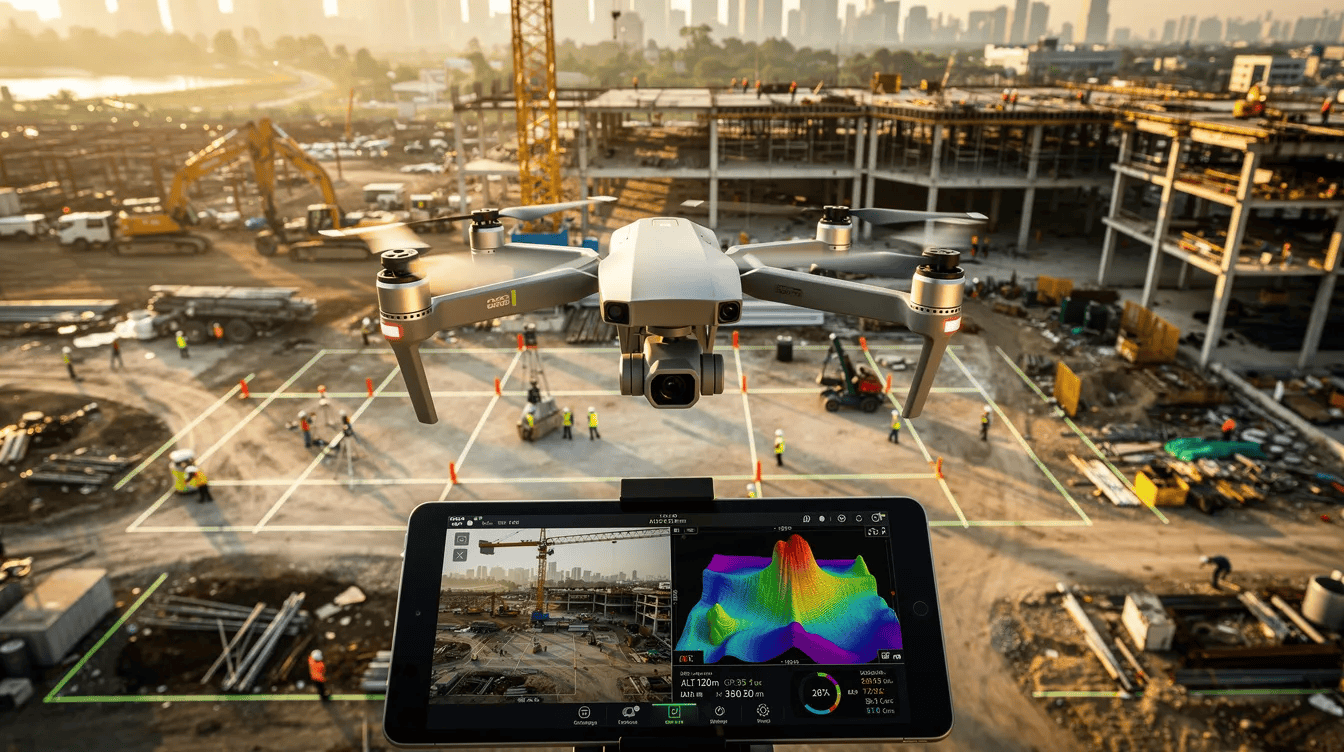
The hiring impact falls on project engineers, safety leaders, field managers, and operations teams. They need to understand what the data means and how to act on it.
A drone can show that progress is behind. It cannot recover the schedule by itself.
7. 3D Printing and Additive Construction
3D printing gets attention, but contractors should stay grounded.
It is not ready to replace broad commercial construction. It has more realistic use in select structures, components, prototypes, temporary works, repetitive forms, and specialty applications.
The value is in speed, material control, labor reduction, and repeatable production.
The limitation is project fit.
Not every site, design, code environment, or owner requirement works for 3D printing. Contractors need leaders who can judge where additive construction makes sense and where it creates risk.
This is a preconstruction and operations question as much as a technology question.
Estimators, project executives, and operations leaders need to assess cost, permitting, schedule, quality control, and trade impact before committing to the method.
8. Cloud Platforms and Connected Jobsites
Cloud-based project management platforms are now basic infrastructure for many contractors.
RFIs, submittals, drawings, daily reports, photos, change orders, schedules, cost data, and field notes cannot live in disconnected systems anymore.
The connected jobsite helps office and field teams work from the same information.
That does not mean the software fixes the process.
Bad data entered faster is still bad data. A platform only works when people use it the right way. That requires discipline from project managers, assistant project managers, superintendents, coordinators, and executives.
The hiring impact is simple.
Contractors need leaders who can run clean workflows. They need people who update information, hold teams accountable, and use project data before a problem becomes expensive.
9. Modular Construction and Offsite Prefabrication
Modular construction and offsite prefabrication are growing because owners want faster delivery and better cost control.
The Whole Building Design Guide defines off-site construction as planning, designing, fabricating, transporting, and assembling building elements for rapid site assembly. It also notes that off-site building includes a range of materials, scales, systems, digital software, and fabrication methods.
The mistake is treating modular as a late-stage shortcut.
It works best when the team plans early. Design, procurement, fabrication, logistics, inspection, shipping, crane picks, and field sequencing all need alignment.
The hiring impact is large.
Contractors need preconstruction leaders, project executives, schedulers, and superintendents who understand manufacturing-style coordination. Modular work punishes late decisions.

10. Low-Carbon Construction and Sustainability Reporting Tools
Low-carbon construction is becoming more tied to procurement, estimating, materials, and owner reporting.
EPA guidance on environmental product declarations explains that life cycle assessment data can report embodied carbon and other environmental impact categories tied to construction materials. DOE notes that U.S. residential and commercial buildings account for about 40% of all energy consumed, and building energy codes govern up to 80% of a building’s energy load.
For contractors, this affects more than sustainability teams.
It touches estimating, procurement, design coordination, value engineering, closeout, and owner reporting. Public, institutional, data center, corporate, and healthcare owners will keep asking tougher questions about materials and performance.
Common low-carbon and sustainability items include:
- Low-carbon concrete mixes
- Mass timber and cross-laminated timber
- Recycled steel
- High-performance envelope systems
- Environmental product declarations
- Energy modeling and code compliance tools
This connects directly to sustainable building practices, but the business issue is broader. Contractors need leaders who can compare cost, schedule, material availability, owner goals, and documentation requirements without slowing the job down.
The hiring impact is clear.
Preconstruction leaders, estimators, project executives, and procurement teams need to understand low-carbon options without losing cost and schedule discipline.
Quick Comparison: 2026 Construction Technology Trends and Hiring Impact
| Technology Trend | Project Impact | Hiring Impact |
|---|---|---|
| AI | Better estimating, documentation, scheduling, and risk review | Estimators, PMs, and executives need stronger data judgment |
| BIM and VDC | Cleaner coordination before work reaches the field | VDC leaders and supers need stronger model fluency |
| Digital twins | Better turnover, asset data, and facility performance | MEP, commissioning, and project leaders need data discipline |
| AR, VR, and XR | Better training, mockups, safety planning, and owner reviews | Safety and field leaders need practical training judgment |
| Robotics | Targeted productivity gains on repeatable or hazardous work | Field leaders need to manage crews and technology vendors |
| Drones and reality capture | Faster progress tracking and stronger documentation | Project teams need to turn site data into action |
| 3D printing | Potential speed and material control on select applications | Preconstruction teams need to judge project fit |
| Cloud platforms | Cleaner communication, cost tracking, and documentation | PMs and executives need disciplined workflows |
| Modular construction | Faster delivery when planning starts early | Schedulers, supers, and project executives need prefab experience |
| Low-carbon tools | Better material, energy, and owner reporting decisions | Estimators and procurement leaders need carbon-aware cost judgment |
Where These Trends Matter Most
These construction technology trends matter across the industry, but they show up fastest on complex work.
Data centers need advanced MEP coordination, power planning, commissioning discipline, and tight schedule control.
Healthcare projects need infection control, phasing, compliance, owner communication, and careful renovation planning.
Manufacturing and industrial projects need stronger procurement, safety planning, equipment coordination, and field leadership. Many 2026 project markets are already testing whether contractors have the right people in place.
Infrastructure work needs better documentation, asset data, and long-term planning.
These sectors reward contractors that can combine field experience with modern tools. They punish contractors that treat technology as decoration.
What This Means for Hiring in 2026
The biggest construction technology gap in 2026 is not the tool.
It is the leadership bench.
Contractors need people who can:
- Lead field teams through change
- Use data without losing judgment
- Keep software clean and current
- Connect office plans to field reality
- Manage owners with better information
- Build trust with trade partners
- Protect schedule and margin
That changes job descriptions.
A superintendent no longer only runs the field. A strong superintendent may need to work with reality capture, BIM coordination, drone updates, field apps, safety data, and tighter owner reporting.
A project manager no longer only tracks RFIs and change orders. A strong PM needs to manage cost, schedule, documentation, and project controls in a connected system.
An estimator no longer only prices drawings. A strong estimator needs to use better data, compare risk, and support early decisions.
For compensation planning, contractors should review current ranges before chasing hard-to-find talent. The Birmingham Group’s construction salary guide gives hiring teams a practical starting point for leadership roles tied to project delivery, field supervision, estimating, and project management.
For teams planning multiple hires, the salary survey can help benchmark pay before offers miss the market. For deeper compensation planning in the new year, the construction salary survey 2026 can support pay decisions tied to leadership, sector experience, and project complexity.
What Contractors Should Do Before 2026 Hiring Tightens
Construction leaders should not wait until a project is understaffed.
Start with the work.
Which projects require stronger BIM coordination? Which owners expect better reporting? Which jobs need advanced MEP leadership? Which teams struggle with software adoption? Which roles are too dependent on one person?
Then review the bench.
Look at project executives, senior PMs, superintendents, estimators, safety leaders, and VDC teams. Ask where the company has real strength and where it is exposed.
The goal is not to hire “tech people.”
The goal is to hire construction people who can lead in a more technical project environment.
That is a different search.
Contractors that already know they have leadership gaps should not wait until a key project is awarded. The firms that move first will have a better chance to secure the project managers, superintendents, estimators, and executives needed to lead more technical work. Hiring teams can start with The Birmingham Group’s construction recruiting process before a vacancy becomes a project risk.
What Construction Professionals Should Watch
For construction professionals, this shift creates opportunity.
The best career paths will not belong only to people who know software. They will belong to people who combine construction judgment with modern project delivery skills.
That includes:
- Superintendents who understand BIM coordination
- PMs who can run clean project controls
- Estimators who work well with data
- Safety leaders who use better training tools
- VDC managers who can influence operations
- Project executives who can lead complex work
Professionals looking for confidential next steps can review current construction jobs or connect through The Birmingham Group’s candidate team. The strongest career moves in 2026 will favor construction professionals who can pair field experience with better technology, better documentation, and stronger project controls.
The Real Trend: Technology Raises the Bar for Leadership
The top construction technology trends for 2026 all point to the same issue.
The work is getting more complex.
Owners expect better reporting. Projects require tighter coordination. Labor remains hard to find. Data centers, healthcare, infrastructure, industrial, and power projects demand stronger planning and execution.
Technology can help.
But technology does not replace leadership.
It exposes weak leadership faster.
A contractor with strong people can turn better tools into better delivery. A contractor with weak process will only create more dashboards, more noise, and more confusion.
The Birmingham Group has focused on construction executive search since 1967. That long view matters right now. The contractors that win in 2026 will not be the ones chasing every new tool. They will be the ones building leadership teams that can use technology to protect schedule, margin, safety, and trust.
For hiring managers, the next step is not buying another tool. It is making sure the right people are in place to use the tools already on the job. The Birmingham Group helps contractors identify construction leaders who can protect schedule, margin, safety, and owner trust through a tighter construction recruiting process.
FAQs
What are the top construction technology trends in 2026?
The top construction technology trends in 2026 include AI, BIM, digital twins, AR and VR, robotics, drones, 3D printing, cloud platforms, modular construction, and low-carbon construction reporting.
Will AI replace construction project managers?
No. AI can support estimating, documentation, scheduling, and project controls. It still needs experienced construction leaders who can judge risk, manage people, and make field decisions.
Why does BIM still matter in 2026?
BIM matters because complex projects need better coordination before work reaches the field. It supports clash detection, sequencing, cost planning, prefabrication, closeout, and owner communication.
Which construction roles need more technology fluency?
Project executives, superintendents, project managers, estimators, safety leaders, field engineers, BIM managers, VDC directors, and commissioning leaders all need stronger technology fluency in 2026.
How should contractors prepare for construction technology changes?
Contractors should audit their current tools, review where field and office data breaks down, train current leaders, update job descriptions, and hire people who can connect technology to real project execution.