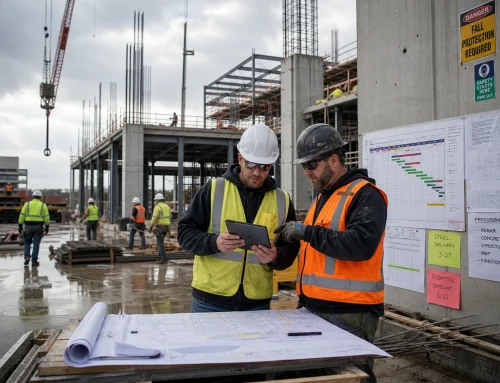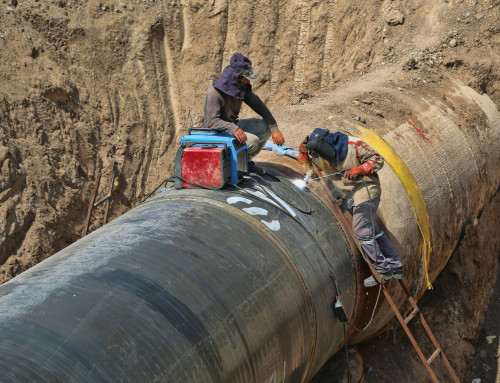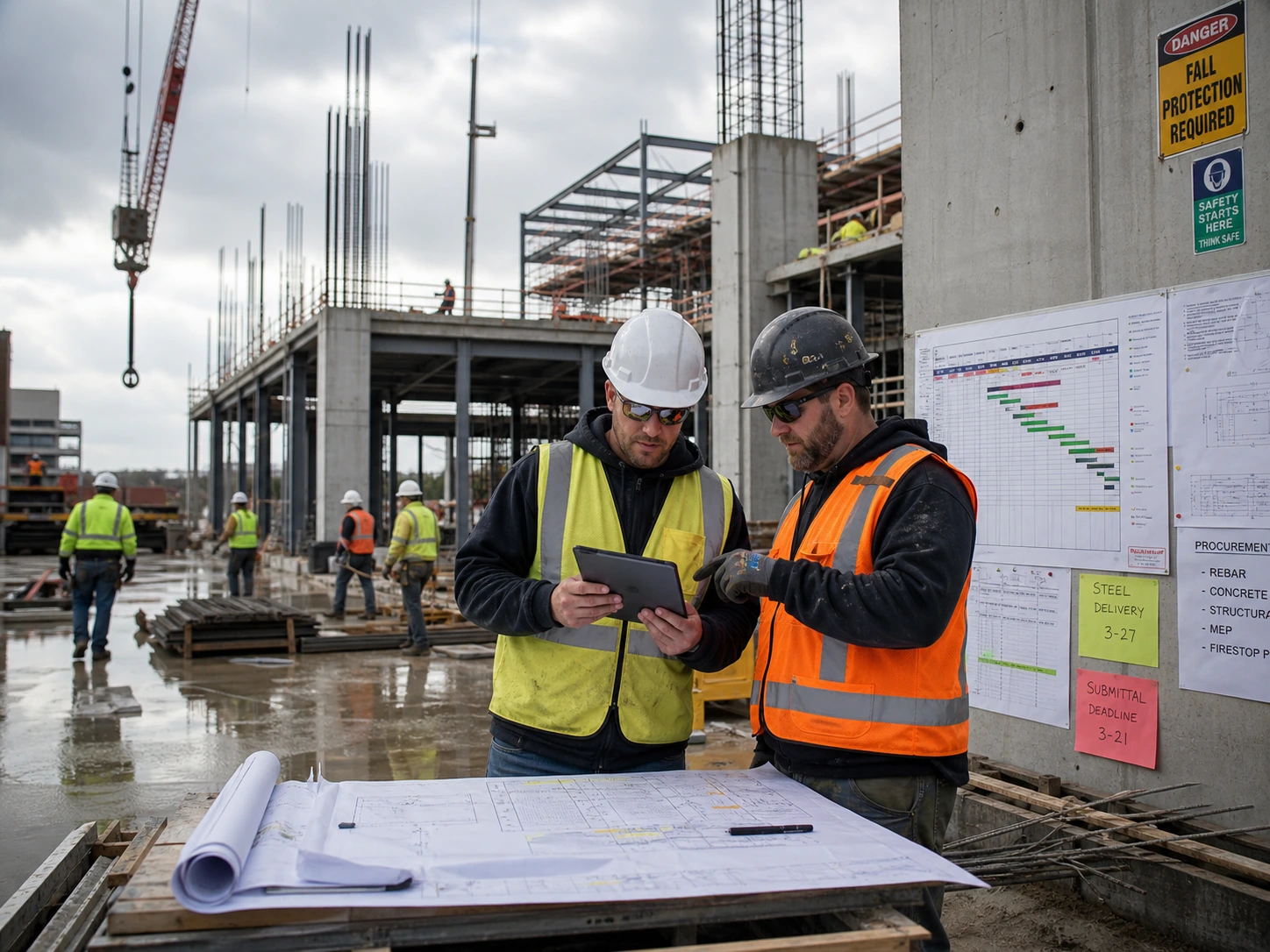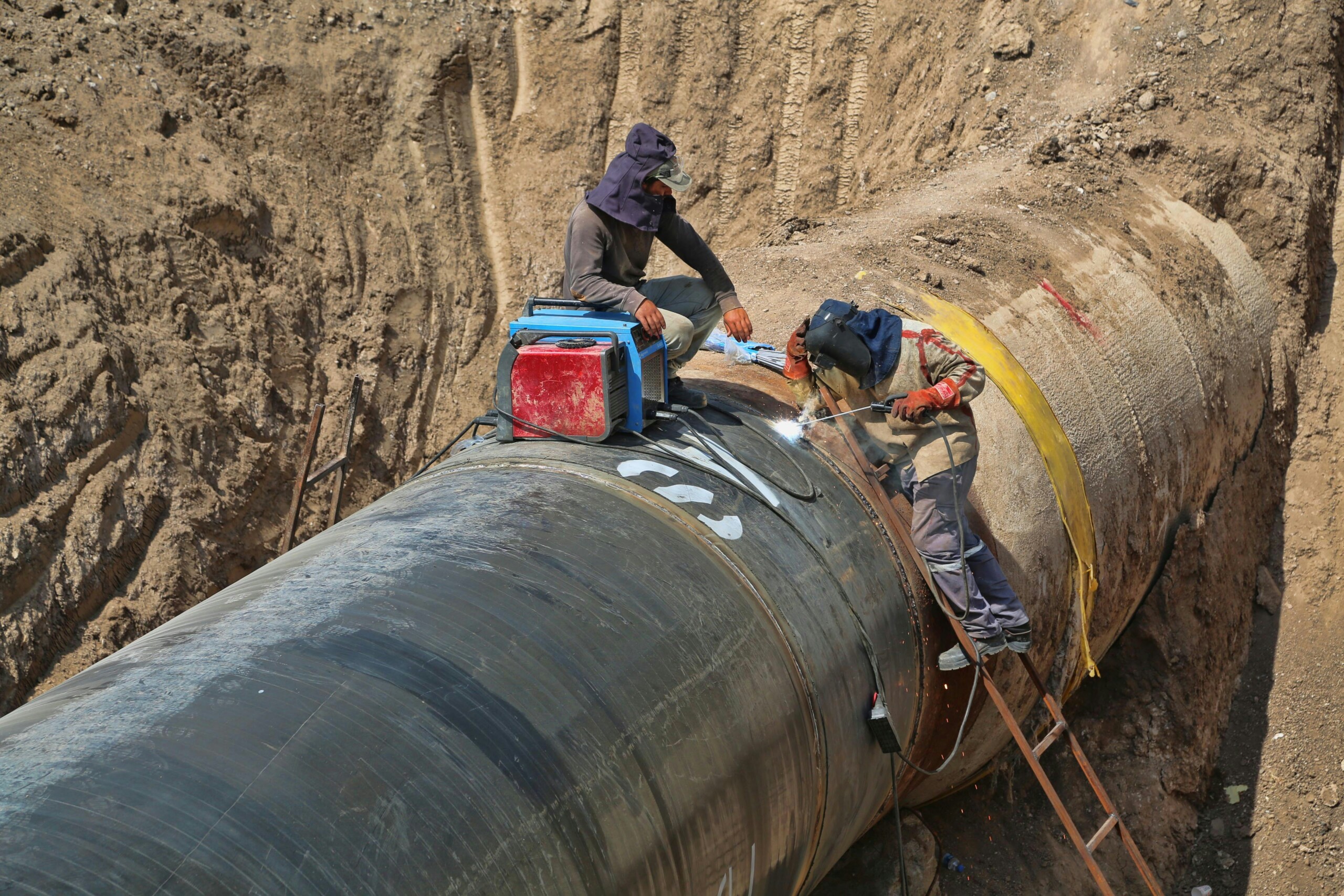

The U.S. construction industry is experiencing something unprecedented. Between 2024 and 2026, a historic wave of data center construction is reshaping the nonresidential building landscape, concentrated heavily in just ten states. And while project demand continues to accelerate, contractors are hitting a wall that has nothing to do with capital, permits, or materials.
They can’t find enough people.
According to McKinsey, nearly $7 trillion will flow into building and upgrading data centers over the next five years. Hyperscalers are individually trending toward $100 billion in annual capital spending. This isn’t a temporary spike. It’s the largest infrastructure investment cycle in modern history, driven by artificial intelligence, cloud computing, and enterprise digital transformation.
Yet the construction workforce shortages threatening to derail this boom are severe. The AGC survey reports that more than 80% of firms are struggling to fill both hourly craft positions and salaried roles, even as sixty five percent expect data center work to grow in the coming year. DataBank research warns that the second half of 2026 into 2027 will see massive activation of leased capacity from 2024 and 2025. And the industry simply doesn’t have the qualified workers to meet demand.
At The Birmingham Group, we see this hiring crisis firsthand. Since 1967, we’ve recruited senior leadership and field talent for contractors across commercial, industrial, and mission-critical sectors. Today, our phones are ringing with urgent requests for data center superintendents, project managers, and estimators in markets like Northern Virginia, Phoenix, Dallas, and Atlanta. The candidates with the right experience are fielding multiple offers, and the competition for proven talent has never been fiercer. If you are a contractor trying to staff mission-critical work, this is exactly where experienced hiring managers are getting stuck.
This article will examine the ten states at the center of the data center boom, detail how concentrated demand is creating acute hiring pressures, and outline the talent strategies contractors are using to compete.

How the Data Center Wave Is Reshaping Construction Demand
Data centers and power projects have become the primary growth engines for nonresidential construction in 2025 and 2026. These aren’t the modest server rooms of a decade ago. Large-scale AI and cloud facilities now routinely exceed one to three million square feet, with power capacities pushing past 300 to 600 MW per campus. Projects of this magnitude require general contractors, specialty contractors, design-build teams, and deep benches of skilled trades working in concert.
The AGC outlook confirms what many in the industry already feel: around sixty five percent of contractors expect data center construction to expand over the next twelve months, making it one of the clear bright spots amid an otherwise mixed outlook reported across commercial sectors. Healthcare and select power projects remain strong, but demand has softened in public transit, warehouse, and some multifamily construction. The result is a migration of construction firms toward data center opportunities.
This concentration creates a geographic problem. When multiple hyperscale campuses break ground simultaneously in a region like Northern Virginia or Phoenix, local talent pools are exhausted within months. Firms must import superintendents, project managers, and craft workers from other states, driving up per diem costs, straining retention, and creating project continuity risks when key personnel are stretched across too many jobs.
The numbers tell the story of acceleration. U.S. companies spent nearly $11 billion across 23 data center construction sites in October 2024 alone, compared to $2.9 billion the previous year. Total spending on data center construction is expected to surpass $52 billion in 2026. More than 60 major projects valued at over $50 billion combined are expected to break ground in the next six months.
This isn’t a market that’s waiting for contractors to catch up. It’s moving forward, with or without adequate staffing.
10 States at the Center of the Data Center Construction Boom
While data center work is happening nationwide, ten states are experiencing an outsized share of projects and, consequently, the most intense hiring pressures. Understanding the dynamics in each market is essential for contractors deciding where to pursue work and how to staff their teams.
Virginia: Northern Virginia’s Unmatched Data Center Cluster
Northern Virginia remains the undisputed global leader in data center construction. Loudoun, Prince William, and Fairfax counties collectively house what the industry calls “Data Center Alley,” with over 600 data centers in operation and capacity expected to roughly double by 2028. The state currently has 16.8 GW of capacity either under construction or in planning, more than any other state by a wide margin.
Large campuses continue expanding in Ashburn and the PW Digital Gateway area of Prince William County. Power constraints and the need for significant transmission upgrades have complicated development, but they haven’t slowed demand. Hyperscale operators and colocation providers continue signing long-term deals, confident that power generation and grid upgrades will catch up.
For contractors, this creates extraordinary hiring pressure. Local general contractors and specialty firms are running multiple concurrent 200 to 400 MW builds, competing intensely for experienced mission-critical superintendents, MEP coordinators, and commissioning managers. Many firms reported poaching talent from competitors or relocating teams from the Carolinas, Pennsylvania, and the Midwest. Wage escalation in Northern Virginia for data center roles has outpaced nearly every other market, and retention has become just as critical as recruitment.
Texas: Dallas-Fort Worth and Houston Surge on Low Power Costs
Texas now ranks second nationally in total data center count. Dallas-Fort Worth and Houston serve as the primary hubs, attracting investment with competitive power prices and pro-development policies that streamline permitting and land acquisition.
The DFW metroplex has seen major campus developments in Garland, Plano, and Irving, while Houston’s energy-sector expertise has made it attractive for data center operators seeking sophisticated power infrastructure. The region’s strengths are compelling: the Dallas-Fort Worth area alone accounts for approximately 11% of the total U.S. data center market, with 870 MW of capacity and 425 MW under construction.
ERCOT’s evolving grid and ongoing transmission constraints have spawned parallel demand for substation and power distribution projects, creating layered opportunities for electrical contractors. One indicator of scale: Vantage’s $25 billion campus in Shackelford County will consist of 10 data centers covering 1,200 acres with 1.4 GW of compute capacity, projected to create 5,000 jobs across construction and operations.
The hiring landscape reflects this intensity. Competition for mission-critical project managers, senior superintendents, schedulers, and QA/QC leaders is fierce. Many projects offer premium pay and rotation schedules to attract out-of-state talent. Contractors expect continued difficulty finding candidates with specialized skills in high-availability systems and are increasingly reskilling teams from commercial and industrial sectors into mission-critical roles.
Arizona: Phoenix and Maricopa County’s Rapid Climb
Phoenix and Maricopa County have emerged as one of the nation’s fastest-growing data center markets, often ranked third nationally for new capacity. Massive developments are underway or planned in Buckeye, Goodyear, and Mesa, with multi-building campuses tied to AI workloads and hyperscale cloud operations.
Arizona’s appeal is straightforward: favorable tax incentives, available land, lower regulatory barriers compared to coastal markets, and a business-friendly environment that attracts both hyperscale operators and colocation providers. The state’s position has strengthened significantly over the past 24 months.
For contractors, the shift has been dramatic. Firms that previously focused on warehouses and light industrial are now being pulled into complex, high-spec data center builds. The resulting skills gap is acute. MEP-focused superintendents, VDC/BIM managers, and estimators familiar with chilled water systems, air-cooled configurations, and liquid cooling technologies are in exceptionally high demand. Many construction firms are bringing in talent from California and the Mountain West, but the competition extends across industrial, logistics, and data center sectors simultaneously.

California: Silicon Valley’s High-Demand, Land-Constrained Market
Silicon Valley, Santa Clara, San Jose, Sunnyvale, remains a premier data center hub despite the highest land and construction costs in the country. Limited greenfield opportunities mean most projects involve retrofits, vertical expansions, or high-density AI-optimized builds on constrained sites.
Power availability and entitlement processes extend preconstruction timelines significantly. Coordination with utilities like PG&E adds complexity. These factors intensify demand for experienced preconstruction executives and project leaders who can navigate tight sites, complex seismic and energy codes, and extended permitting cycles.
The labor implications are significant. Contractors must secure superintendents and project managers who understand California’s unique regulatory environment. The strong demand in data center construction is drawing talent away from other sectors, including life sciences and commercial office tenant improvement work, creating salary escalation and retention challenges throughout the Bay Area. Despite these hurdles, California’s position as a tech epicenter ensures sustained investment in data center capacity.
Illinois: Chicago’s AI and Enterprise Data Center Hub
Chicago and its surrounding suburbs, Elk Grove Village, Aurora, Franklin Park, are experiencing strong growth driven by AI and enterprise cloud demand. Major commitments from companies like Microsoft and Google are transforming the region into a Midwest data center hub.
The city currently has 692 MW of capacity, accounting for approximately 9% of the U.S. data center market, with 244 MW under construction. Chicago’s central location, robust fiber infrastructure, and cool climate support both hyperscale campuses and colocation facilities serving regional enterprises.
New ground-up campuses tied to AI training workloads and high-density computing are driving demand for heavy electrical infrastructure and advanced cooling strategies. Contractors report intense need for mission-critical project executives, MEP project managers, safety leaders, and commissioning specialists familiar with Tier III and Tier IV standards. The challenge is compounded by parallel demand from industrial and logistics build-to-suit projects competing for the same pool of field leaders and estimators.
Ohio: Central Ohio’s Emergence as a Hyperscale Hotspot
Central Ohio, particularly the Columbus region, has rapidly emerged as a significant new player in the data center market. The state now ranks third nationally in total data center capacity, with 1.6 GW existing and 2.4 GW planned. More than 60% of Ohio’s data centers concentrate in Columbus, creating a hub effect along the I-270 corridor and in New Albany.
The attraction is clear: generous tax incentives, available land, and a business environment deliberately designed to compete with established coastal markets for hyperscale investment. Cloud computing and AI data processing are driving the expansion, with major operators committing to multi-phase campus developments.
The hiring effects are pronounced. Strong competition exists for superintendents, project managers, schedulers, and civil/site leaders who can manage large-scale, multi-phase sites with heavy infrastructure requirements. Many construction firms are importing mission-critical talent from Michigan, Indiana, and Pennsylvania, increasing per diem and travel costs. Ohio’s rapid ascent means local labor markets were largely unprepared for the sudden scale-up in construction demand.
Georgia: Atlanta’s Rapidly Expanding Data Center Corridor
The Atlanta metro has become one of the hottest U.S. data center markets. Suburbs like Douglasville, Lithia Springs, and Lithonia are seeing significant development, driven by strong fiber connectivity, major utility-scale power projects, and corporate relocations bringing additional digital demand.
Microsoft’s recent opening of a facility covering approximately one million square feet across 85 acres outside Atlanta signals the market’s emergence. Georgia is among the 15 states with at least 1 GW of existing or planned data center capacity.
The region faces concurrent growth in power generation, transmission, and industrial/logistics projects, all competing for many of the same trade and management skill sets. The limited pool of seasoned mission-critical superintendents, MEP coordinators, foremen, and QA/QC professionals forces contractors to promote talent faster than ideal and rely more heavily on external recruiters. Wage rates and salary offers for superintendent, project manager, and estimator roles have risen sharply over the past 24 to 36 months, outpacing several other Southeast markets.
Iowa: West Des Moines as a Renewable-Powered Data Center Node
West Des Moines and the greater Des Moines area have become strategic data center locations with a distinctive focus: projects powered by 100% renewable energy commitments. Long-running hyperscale campuses continue adding new buildings and phases, with power tied to wind and other renewable sources.
Iowa’s relatively small population and construction workforce create a unique challenge. Even a few large data center projects can strain the entire state’s pool of qualified superintendents and tradespeople. Contractors must bring field leadership, project engineers, and safety professionals from neighboring states like Minnesota, Nebraska, and Missouri.
The emphasis on renewable integration increases demand for specialized electrical, substation, and grid-interconnection expertise. Association officials continue to watch Iowa as a test case for how renewable-focused data center development can proceed when workforce availability is the primary constraint.
Nebraska: Sarpy County’s High-Tech Growth with Meta and Others
Sarpy County, south of Omaha, has transformed into a high-tech corridor with significant investment from Meta and other large cloud and social media platforms. These campuses have been expanding in multiple phases since the late 2010s and continue adding new buildings and infrastructure.
Nebraska’s relatively modest local population and competing industrial/manufacturing projects create acute stress on the regional construction workforce. The challenge isn’t project financing or demand. It’s finding experienced mission-critical project managers, commissioning authorities, and MEP superintendents willing to relocate to or commute into Sarpy County.
Long project durations, multi-year campus developments, put a premium on retention. Losing even one key superintendent mid-phase can jeopardize schedule and quality on projects where specialized skills are difficult to replace quickly.
Nevada: Reno’s Mega-Campuses and Specialized Facilities
The Reno-Tahoe region hosts some of the world’s largest, most specialized data center campuses. Approved and upcoming projects in Las Vegas and Reno will grow the area’s capacity by 950%, with upcoming builds adding 3,800 MW to local data center capacity.
Major investments are reshaping the market: Google has announced a $400 million expansion, Microsoft recently acquired 300 acres, and Vantage Data Centers has a $3 billion project in development. A 495 MW Switch data center planned to run on 100% renewable energy represents another significant addition.
The facilities in the Tahoe-Reno Industrial Center area feature very large, low-PUE campuses, advanced cooling strategies tuned to local climate, and significant on-site power and backup generation infrastructure. Contractors face high demand for project leaders familiar with high-availability designs, advanced commissioning sequences, and multi-tenant security requirements. Reno pulls talent from California and the Mountain West, but sustained competition across industrial, logistics, and data center sectors makes retention critical.
Why This Boom Is Creating a Hiring Crisis for Contractors
The scale of the data center boom would challenge workforce capacity under normal circumstances. But these aren’t normal circumstances.
AGC survey results confirm the severity: 82% of construction firms struggle with hiring hourly craft workers, and 80% face similar difficulties with salaried roles. This crisis is hitting at precisely the moment when data center work is accelerating to its highest levels ever.
Data centers are inherently talent-intensive projects. The tight schedules, high technical requirements, complex commissioning sequences, and parallel power projects drive demand for very specific experience. A superintendent who has successfully delivered a 200 MW facility in Northern Virginia is fundamentally more valuable than someone with general commercial experience, and dramatically harder to find.
Many contractors now cite labor availability, not project demand, as their primary growth constraint in 2025 and 2026. Ken Simonson, AGC’s chief economist, has noted that persistent labor shortages continue to shape the business outlook for construction firms nationwide. The data center market exemplifies this dynamic in its most acute form.
Several factors compound the shortage:
| Factor | Impact on Workforce |
|---|---|
| Immigration enforcement | Immigration enforcement actions and uncertainty about immigration authorities’ policies have reduced the flow of construction craft workers in some markets |
| Retirements | Senior superintendents and project executives with mission-critical experience are aging out of the workforce |
| Limited new entrants | Workforce training programs haven’t scaled to meet demand for skilled trades in high-growth markets |
| Competition | Industrial, logistics, healthcare, and power projects compete for the same talent pools |
The result is that many firms are overextending their best superintendents and project managers across too many projects. Burnout, turnover, and quality/safety risks are the predictable outcomes.
On data center and power projects, leadership gaps become schedule risk fast. If you need proven superintendents, project managers, or project executives before the market forces a rushed hire, talk with The Birmingham Group about construction leadership hiring support.

Critical Roles Under Pressure: Who Contractors Can’t Hire Fast Enough
Not all roles are equally constrained. Mission-critical projects hinge on a core set of leadership and technical positions that are proving exceptionally difficult to fill.
Mission-Critical Superintendents command premium compensation because they understand the unique demands of data center construction: phased turnover, live-environment coordination, and zero-tolerance commissioning standards. The pool of superintendents with multiple completed data center projects on their resumes is finite and heavily recruited.
Project Managers with data center experience must coordinate complex MEP systems, track critical equipment deliveries, manage compressed schedules, and interface with owner representatives who often have deep technical knowledge. General commercial PM experience rarely translates directly to mission-critical work without significant ramp-up time.
Estimators who understand data center pricing, power distribution systems, redundant cooling, specialized structural requirements, are essential for competitive bidding. Many firms reported difficulty finding estimators who can accurately price mission-critical work without significant oversight from senior leadership.
Project Executives who can oversee multiple concurrent data center projects while maintaining client relationships and ensuring profitability are in exceptionally high demand in markets like Northern Virginia, Texas, and Arizona.
Safety Directors face unique challenges on data center projects, where construction often occurs adjacent to or within operating facilities. Experience managing safety in energized environments and coordinating with federal officials on OSHA compliance is increasingly valued.
VDC/BIM Leaders have become critical as AI-driven designs and high-density computing increase the importance of preplanning, clash detection, and prefabrication coordination. Projects that invest heavily in VDC/BIM upfront see fewer field conflicts and faster commissioning.
MEP Coordinators manage the intricate relationships between electrical, mechanical, and plumbing systems that define data center performance. Finding coordinators who understand both construction sequencing and operational requirements for power and cooling is a consistent challenge.
Commissioning Managers ensure that completed facilities meet performance specifications before turnover. As projects grow larger and more complex, experienced commissioning professionals have become one of the scarcest resources in the market.
At The Birmingham Group, we’re seeing strong compensation escalation for these roles in hot markets. Superintendents and project managers with proven data center track records are commanding salaries ten percent or more above what they could earn in general commercial construction. If you need a baseline for offers, start with verified salary guide ranges.
How the Labor Shortage Impacts Schedules, Pricing, and Risk
The consequences of labor shortages extend far beyond recruitment headaches. They’re reshaping how projects are bid, scheduled, and executed.
Schedule impacts are becoming routine. Limited staffing leads to longer preconstruction timelines as firms wait to secure key personnel before committing to aggressive schedules. Some contractors are walking away from opportunities or deferring starts because they lack the team to execute. Project delays ripple through owner timelines, affecting when facilities can come online and generate revenue.
Pricing effects are significant. Contractors are factoring labor scarcity premiums into their bids, including overtime assumptions, imported labor costs, and retention incentives. Some firms reported having to raise bid prices or turn down work entirely when they couldn’t confidently staff a project. These dynamics mirror the tariff related costs that drove bid adjustments throughout 2025, adding another layer of uncertainty to project financing.
Risk implications are perhaps most concerning. Thinner supervision ratios, higher burnout among key personnel, and less experienced teams increase safety incidents, rework rates, and commissioning failures. On mission-critical projects where uptime and reliability are paramount, these risks can translate to significant financial and reputational consequences.
Owners and developers are responding by scrutinizing team resumes more closely before awarding contracts. The ability to demonstrate a stable, experienced data center team has become a competitive differentiator, sometimes more important than price alone.
Strategies Contractors Are Using to Compete for Data Center Talent
There’s no single solution to the hiring crisis, but leading contractors in the ten hot states are deploying a mix of strategies to attract and retain the talent they need.
Compensation adjustments are the most visible response. Firms in Northern Virginia, Texas, Arizona, and Georgia have implemented market-based salary increases specifically for mission-critical roles. Project completion bonuses for superintendents and project managers on major data center projects have become common, as have retention incentives on multi-year campus developments.
Internal pipeline development is gaining traction. Forward-thinking contractors are fast-tracking high-potential superintendents and assistant project managers into mission-critical projects with structured mentorship. Rather than waiting for fully experienced candidates who may never become available, they’re investing in developing talent internally.
Geographic deployment strategies help maximize limited resources. Some firms are building hub-and-spoke models, with core mission-critical teams that travel among projects in Virginia, Texas, Georgia, and Illinois while local hires handle general trades. This approach requires careful rotation scheduling to prevent burnout but can extend the reach of experienced leadership.
Partnership with training programs addresses the longer-term pipeline. Collaboration with technical schools, union halls, and apprenticeship programs in states like Ohio, Georgia, and Nebraska is building craft and foreman pipelines that will pay dividends in coming years. Some firms have partnered with hall contractors and local workforce development organizations to create data center-specific training tracks.
Specialized recruitment partnerships have become essential. Many contractors are relying on construction executive search partners who specialize in mission-critical markets to identify and land passive candidates, experienced professionals who aren’t actively job searching but might consider the right opportunity.
How The Birmingham Group Helps Contractors Staff the Data Center Boom
The Birmingham Group has been recruiting construction talent since 1967. Our dedicated focus includes mission-critical, industrial, healthcare, and commercial sectors, the exact areas where demand is converging in today’s market.
For data center and power projects, we commonly fill roles including:
- Project Executives
- Senior and General Superintendents
- Project Managers
- Estimators
- Schedulers
- Safety Directors
- VDC/BIM Leaders
- MEP Coordinators
Our deep network in the hot markets, Northern Virginia, Texas, Arizona, California, Illinois, Ohio, Georgia, Iowa, Nebraska, and Nevada, allows us to surface experienced candidates quickly. Many of the best data center construction professionals aren’t actively searching job boards. They’re heads-down on current projects, performing well, and not considering a move unless the right opportunity finds them. That’s where we come in.
Our approach emphasizes culture-fit assessment, market-based salary benchmarking, and a transparent process designed to reduce the risk of mis-hires on time-critical projects. When you can’t afford to get a superintendent hire wrong mid-project, working with a specialized search partner becomes risk mitigation. If you want a direct path, start here: hiring managers.
If you’re a hiring leader staffing data center or power projects, we’d welcome a conversation about your upcoming pipeline needs. Contact us to discuss how we can help you secure the talent to execute.
If you’re a construction professional with data center, mission-critical, or power project experience, we invite you to submit resume for a confidential conversation. The emerging opportunities in this market are significant, and the right move could accelerate your career. You can also review current construction jobs we are actively supporting.
The data center construction boom isn’t slowing down. The only question is whether your team is positioned to capture the opportunity.
Frequently Asked Questions
Why is data center construction hiring so difficult in 2025 and 2026?
Data center projects require leaders who have already delivered high-availability power and cooling systems under tight schedules. That experience is scarce, and demand is concentrated in a small set of markets.
Which states have the most data center construction hiring pressure right now?
Virginia, Texas, Arizona, California, Illinois, Ohio, Georgia, Iowa, Nebraska, and Nevada are seeing the highest concentration of large projects and the tightest labor conditions.
What roles are hardest to hire for mission-critical data center work?
Mission-critical superintendents, data center PMs, estimators, project executives, MEP coordinators, VDC/BIM leaders, safety leaders, and commissioning managers are consistently the hardest roles to staff.
How far ahead should contractors recruit for data center projects?
Many contractors are recruiting six to twelve months ahead of groundbreak to protect schedules and avoid late-stage staffing gaps.
How can The Birmingham Group help with data center hiring?
We specialize in construction recruiting and executive search for mission-critical work, helping contractors secure proven leaders and field talent before staffing gaps become schedule risk.