Arizona Mega Projects 2026: Semiconductor Fabs, Infrastructure and Industrial Construction Driving Arizona’s Building Boom

Arizona has become one of the most active construction markets in the country. By early 2025, Industrial Info Resources tracked nearly $50 billion in active industrial construction across the state, with semiconductor fabs, data centers, power plants, and mining operations leading the pipeline. This surge reflects a major shift in American manufacturing strategy, one that positions Phoenix and its surrounding metros at the center of domestic chip production and advanced technology supply chains.

The drivers behind this growth are structural, not cyclical. The CHIPS and Science Act delivered $11.6 billion in loans and grants to TSMC alone, while the Inflation Reduction Act continues to incentivize clean energy and advanced manufacturing investment. Arizona’s business-friendly regulatory climate, abundant land, and available power capacity have attracted over 60 semiconductor expansions representing approximately $205 billion in announced investment through the end of the decade. Governor Katie Hobbs highlighted this momentum at SEMICON West in Phoenix, where more than 600 ecosystem partners from 17 countries gathered to discuss the clustering effect reshaping the Greater Phoenix area.

This article examines the mega projects driving Arizona’s construction boom through 2026 and beyond. From The Birmingham Group’s perspective as a construction executive search firm, we focus on how these investments translate into demand for superintendents, project managers, and construction executives. For GCs, developers, and construction professionals evaluating relocation or market entry, the data points to a sustained, multi-year opportunity, but one that requires proven leadership to execute.

Arizona Mega Projects Are Creating a Leadership Shortage

TSMC, Intel, hyperscale data centers, and major infrastructure programs are all competing for the same experienced superintendents and project managers. Firms that secure proven leaders early are winning the best work.

Request Proven Construction Leaders

Construction professionals can also
submit a resume for confidential review.

An aerial view captures a large-scale construction site bustling with activity, featuring multiple tower cranes and workers in hard hats, indicative of the ongoing development of new manufacturing facilities in Arizona. This significant investment is part of the 2026 semiconductor infrastructure and industrial construction pipeline aimed at meeting global demand and driving job creation in the advanced chip production sector.

The Phoenix Semiconductor Construction Boom: Anchor Fabs Driving the Pipeline

Semiconductor projects form the core of Arizona’s mega-project story through 2026, representing well over $100 billion in announced investment. These are not speculative commitments—they involve active construction sites, federal funding agreements, and production timelines already underway.

TSMC Phoenix Campus

TSMC’s Phoenix campus in north Phoenix anchors the pipeline. The company broke ground on its first fab in 2021 and a second in 2022, each exceeding 2 million square feet. Three leading-edge fabs are now under development, backed by $6.6 billion in federal grants and $5 billion in loans under the CHIPS and Science Act.

The manufacturing process nodes span 4nm, 3nm, and 2nm technologies. Fab 1 reached initial production in Q4 2024 with 20,000 12-inch wafer starts per month, ramping to 600,000 annually. These advanced chips power consumer electronics including Apple’s iPhones and MacBooks, with applications extending to AI infrastructure and high-performance computing.

Key project details include:

  • Fab 1: Producing 4nm chips; high-volume production began first half of 2025
  • Fab 2: Targeting 2- and 3-nanometer semiconductors with expected completion in 2027
  • Fabs 3-6: Land acquisition of $197 million in January 2026 accommodates up to five additional fabs with production extending through 2030
  • Advanced packaging facilities: Two facilities planned by 2028 to support end markets requiring 2.5D and advanced packaging

The scale is substantial—tens of billions in total project value with thousands of construction workers on site at peak phases. Cleanroom construction, process utilities, and MEP coordination demand 24/7 schedules and experienced semiconductor superintendents who understand the precision required for mass production environments.

Intel Ocotillo Campus Expansion

Intel’s Ocotillo campus in Chandler adds another $20 billion commitment for two new leading-edge fabs, commonly cited as Fab 52 and Fab 62. Federal support totaling $3.94 billion backs this expansion, which includes modernization of existing facilities using Intel 18A technology.

The technologies involved—RibbonFET and PowerVia—create significant mechanical and electrical complexity. Cleanroom specifications, process utility installations, and power systems require field leadership with prior fab experience. Active construction announced around 2021-2022 continues through 2026 as tools are installed, tested, and chip production ramps.

Amkor Advanced Packaging Facility

Amkor Technology’s advanced packaging and test facility in Peoria addresses a critical component of the semiconductor supply chain often overlooked in fab discussions. The project received $400 million in federal incentives with total scope in the low billions.

The facility focuses on 2.5D and advanced packaging for AI and high-performance computing customers. An estimated 2,000 long-term jobs will result from this new manufacturing facility, with heavy near-term construction work on a greenfield site. A 2024 strategic agreement with TSMC formalizes supply chain integration, enabling end-to-end domestic production from wafer to packaged chip.

Semiconductor Ecosystem Expansion

The anchor fabs are pulling suppliers into Arizona. Over 35 semiconductor companies have announced expansions, including:

  • Wafer and equipment suppliers clustering in Phoenix metro
  • Specialty gas and chemical facilities (Sunlit Chemical’s $100 million land purchase, Air Liquide’s $60 million Phoenix facility)
  • Materials suppliers (Fujifilm’s $88 million Mesa expansion, Applied Materials’ materials-to-fab center)
  • Pentagon Technologies’ wafer-cleaning operation in Mesa
  • KPCT Advanced Chemicals and Chang Chung in Casa Grande

Arizona State University supports workforce development through U.S. Department of Commerce-funded NNSTC Prototyping and NAPMP Advanced Packaging Piloting Facilities opening by 2028, providing research and training capacity for the growing industry.

Advanced fab projects demand sophisticated construction delivery: strict schedule milestones, high QA/QC standards, complex cleanroom MEP coordination, and around-the-clock schedules. This creates heightened demand for seasoned semiconductor-experienced superintendents and project managers who can execute at scale.

The image depicts a modern semiconductor manufacturing facility with sleek, clean lines and an industrial design, showcasing the advanced infrastructure essential for chip production and mass manufacturing operations. This facility represents a significant investment in Arizona's growth, reflecting the global demand for advanced chips and technology in the modern world.

Data Center Construction Surge in Greater Phoenix

Phoenix has emerged as one of the top U.S. data center markets. Power availability, fiber connectivity, relatively low natural disaster risk, and proximity to West Coast demand make the region attractive for hyperscale operators. The AI boom and expansion of cloud computing services continue to accelerate construction timelines.

The 2023-2026 pipeline includes substantial activity:

  • Google’s Project Redhawk: $1.6 billion in current spending across three planned buildings. Building 1 with two server halls completes summer 2025, Building 2 in 2026, and Building 3 potentially starting in 2028.
  • Hyperscale campuses in Mesa, Goodyear, and East Valley: Multi-building developments with 100+ MW planned capacity serving global demand for AI infrastructure.
  • Ongoing multi-phase builds: Major operators including CyrusOne, QTS, Stack Infrastructure, and EdgeCore continue adding shells and fit-outs on 12-24 month cycles.

Phoenix has several hundred megawatts of capacity planned or under construction through 2026, translating to hundreds of millions to low billions of dollars in cumulative construction value. Power consumption requirements for AI workloads and autonomous vehicles applications drive facility specifications beyond traditional enterprise data center standards.

Construction characteristics differ from standard commercial work:

  • Tilt-up or steel structures with highly intensive MEP systems
  • Redundant power and cooling infrastructure requiring energy storage integration
  • Security and commissioning requirements demanding strict QA protocols
  • Fast-track, design-build delivery models with phased occupancy

These timelines change staffing needs significantly. Multiple concurrent projects in the metro compete for the same pool of mission-critical superintendents and PMs. Owners strongly prefer leaders with prior data center, semiconductor, or healthcare MEP-heavy experience—narrowing the effective candidate pool considerably.

Infrastructure and Transportation Mega Projects Enabling the Boom

Arizona’s road and infrastructure build-out runs in parallel with private capital investment. Federal funding through the Infrastructure Investment and Jobs Act and state programs accelerates projects that support industrial growth.

Interstate and Highway Work

Major highway projects relevant to Phoenix growth include:

  • I-10 widening between Phoenix and Casa Grande: Critical freight and commuter corridor with multi-year construction extending into mid-2020s. This route connects semiconductor campuses with logistics hubs and the Mexican border.
  • Loop 303, Loop 202, and I-17 improvements: Supporting west Phoenix and north Valley growth where semiconductor fabs, data centers, and industrial parks are concentrated.

Energy and Utility Infrastructure

Supporting the power consumption demands of fabs and data centers requires substantial infrastructure:

  • West Camp wind farm: 89 turbines at 4.5 MW each for 400 MW peak capacity, plus a 250 MW lithium-ion BESS (battery energy storage system). Construction recently started with mid-2027 completion expected.
  • ProEnergy Services peaking station: 600 MW using six 50 MW combustion turbines. Construction began mid-2024 with summer 2026 completion targeted. This ensures grid reliability amid high-demand semiconductor manufacturing operations.
  • High-voltage transmission and substation projects: Serving north Phoenix, Chandler, and West Valley locations where fabs and data centers require significant load.

Water Infrastructure

Semiconductor manufacturing requires substantial water resources. Water and wastewater infrastructure expansions include new treatment capacity, pipelines, and reuse infrastructure serving fabs and master-planned industrial parks. These projects create demand for experienced civil superintendents, project engineers, and construction managers.

Infrastructure schedules are tightly linked to private mega projects. Delays in interchanges, utility upgrades, or water facilities can constrain fab or data center commissioning. Owners and agencies increasingly seek contractors with leadership bench strength to manage overlapping phases, night work, and complex coordination with live traffic and operational communities.

The image depicts a busy highway construction scene featuring heavy equipment and workers in safety vests, indicating ongoing infrastructure development crucial for projects like the Arizona mega projects 2026, which aim to enhance semiconductor manufacturing and support job creation in the technology sector. This construction is part of a larger effort to meet global demand for advanced chips and improve manufacturing operations in the modern world.

Industrial and Manufacturing Construction Tied to Supply Chain Growth

The semiconductor and data center clusters are catalyzing a broader wave of industrial and advanced manufacturing construction. Logistics facilities, component manufacturing, precision metals, and clean energy-related projects create additional demand across the Phoenix metro.

Logistics and Warehouse Development

Large-scale distribution and warehouse projects support semiconductor supply chains and regional population growth:

  • Distribution centers and build-to-suit facilities in Goodyear, Buckeye, Glendale, and Mesa
  • Multi-building industrial parks with millions of square feet under construction or planned through 2026
  • E-commerce fulfillment centers serving regional demand

Private companies developing these facilities benefit from proximity to fabs, favorable land costs, and established freight infrastructure. The Arizona Commerce Authority reports dozens of supply chain firms in chemicals, packaging, and transportation relocating to support the manufacturing ecosystem.

Advanced Manufacturing and Energy Projects

Beyond logistics, advanced manufacturing investment includes:

  • Mining operations: A zinc-lead-silver mine with a 12,000-ton-per-day concentrator targeting 111,000 tons zinc, 138,000 tons lead, and 7.3 million ounces silver annually starts 2027. The 22-year project life ensures long-term materials supply for domestic manufacturing.
  • Battery and EV components: Manufacturers considering or building facilities to take advantage of regional supply chains and energy incentives tied to the Inflation Reduction Act.
  • Specialty manufacturing: Precision components, packaging materials, and equipment suppliers directly serving Intel and TSMC ecosystems. Examples include gallium nitride and other specialty materials essential for leading edge semiconductor devices.

Construction features include large-scale tilt-wall or steel industrial shells, high clear heights, extensive dock infrastructure, and sometimes specialized process areas or clean manufacturing zones.

Many regional and national GCs are expanding Arizona offices or entering the market specifically to pursue industrial and manufacturing work. This intensifies competition for mid- to senior-level field leadership—with some leaders being recruited away from commercial or multifamily sectors into higher-margin industrial assignments.

How Mega Projects Translate into Surging Leadership Demand

Arizona’s construction workforce is expanding, but not fast enough to keep pace with $200+ billion in cumulative mega project commitments. This creates a pronounced leadership bottleneck that affects project schedules, contract negotiations, and competitive positioning.

Demand drivers include:

  • Simultaneous ramps at TSMC, Intel, and Amkor sites requiring hundreds of superintendents and project managers
  • Parallel growth in data centers and logistics parks pulling from the same pool of experienced leaders
  • Infrastructure agencies and heavy civil contractors recruiting aggressively for large highway and utility programs
  • Job creation across the sector outpacing available talent supply

The specialization factor compounds the challenge. Owners strongly prefer leaders with prior experience in semiconductor, data center, or highly technical industrial projects. Cleanroom standards, complex MEP systems, and commissioning requirements mean generic commercial experience is often insufficient. This narrows the effective candidate pool and raises the bar on experience.

From The Birmingham Group’s perspective, hiring managers increasingly request:

  • Multi-project superintendents who can manage concurrent phases or multiple buildings on large campuses
  • Senior project managers familiar with fast-track delivery, GMP contracts, and owner/consultant coordination on mega projects
  • Construction executives able to build out Arizona offices, lead multi-billion-dollar regional portfolios, and scale teams quickly

The concentration of investment creates both opportunity and risk. Firms that secure proven leadership can pursue larger, more complex projects. Those that cannot fill critical roles face schedule delays, cost overruns, and potential exclusion from owner shortlists.

Role-Specific Impacts: Superintendents, Project Managers, and Construction Executives

Different leadership roles are feeling the boom in distinct ways, but all three—superintendents, PMs, and executives—are in elevated demand through at least 2026.

Superintendents: Field Leadership at the Center of Arizona’s Mega Projects

Field leadership is the tightest constraint on schedule performance for mega projects. Heavy demand exists for semiconductor, mission-critical, and heavy civil superintendents with experience coordinating large self-perform and subcontractor teams on multi-year programs.

What differentiates Arizona mega-project superintendent roles from standard commercial assignments:

  • Scale of teams: Overseeing multiple semiconductor fab modules or data center phases simultaneously, coordinating hundreds of craft workers per shift
  • Technical coordination: Managing strict cleanroom or uptime constraints, working with process tool vendors, and ensuring QA/QC standards meet owner specifications
  • Schedule intensity: 24/7 operations with night shifts, weekend work, and phased turnover milestones
  • Owner exposure: Direct interaction with high-profile technology customers who track construction progress closely

The Birmingham Group sees strong demand for multi-project superintendent roles, traveling superintendents relocating for multi-year assignments, and leaders with mission-critical or industrial experience. Importantly, candidates with existing Arizona relationships and local knowledge command premium consideration.

Project Managers: Managing Complexity and Schedule Risk

PM work on fabs, data centers, and industrial parks involves complexity that exceeds typical commercial assignments. Overlapping phases, global supply chain coordination, and stringent owner reporting requirements define the role.

Core competencies owners seek include:

  • GMP negotiations and early procurement strategies for long-lead MEP equipment
  • Coordination with process tool vendors on semiconductor jobs
  • Integration with commissioning teams for mission-critical facilities
  • Design-build and IPD experience, as those delivery models are common on semiconductor and data center work

Arizona PMs often manage contract values in the hundreds of millions. Firms seek PMs who can step into senior PM or operations roles over time, providing career development that attracts candidates from higher-cost markets in California and the Pacific Northwest.

The trend of PMs relocating to Arizona for long-duration mega projects continues to accelerate. Pipeline visibility through 2026 and beyond makes the relocation decision easier to justify, as leaders can see multi-year career runways with limited market risk.

Construction Executives: Scaling Arizona Operations

Construction executives in Arizona’s boom lead regional offices or business units focused on semiconductor, industrial, and infrastructure portfolios. Their responsibilities are strategic:

  • Workforce planning and succession planning for field leaders
  • Building relationships with owners like TSMC, Intel, Amkor, data center operators, and public agencies
  • Setting hiring plans and compensation strategies to compete for scarce talent
  • Managing risk on multi-phase, multi-client portfolios worth billions

Some firms are creating new executive-level roles specifically tied to mega projects—VP of Advanced Manufacturing, Regional Mission-Critical Director, or Arizona Operations Executive. The Birmingham Group is increasingly engaged on retained searches for these roles due to their strategic importance and limited candidate pool.

The scarcity of proven executives affects project selection and risk appetite. Firms without strong regional leadership may decline opportunities or take on projects at lower margins due to execution concerns.

Salary Pressure and Leadership Competition in Arizona

The concentration of mega projects has pushed Arizona’s construction leadership compensation above historic norms, especially in Phoenix metro. This is not a temporary spike—structural demand through at least 2026 supports sustained compensation growth.

Key salary and compensation trends The Birmingham Group observes:

  • Base salary growth: Experienced superintendents and PMs seeing base salaries rise faster than inflation since 2021
  • Incentive structures: Increased use of sign-on bonuses, retention bonuses, project completion incentives, and per diem for traveling leaders
  • Owner influence: Aggressive schedules and penalty-heavy contracts prompt contractors to pay more for proven leaders who can protect margins
  • Relocation packages: Enhanced support for out-of-state candidates including housing assistance and moving allowances

The Birmingham Group’s Construction Salary Survey provides data for Arizona leadership compensation benchmarks. Firms entering the market or expanding operations should request current data to align salary bands with market reality for semiconductor and data center roles.

Competitive dynamics create additional pressure:

  • National GCs and CM firms entering or expanding in Arizona, recruiting leaders from local contractors
  • Out-of-state candidates weighing Arizona’s cost of living against long-term pipeline visibility
  • Existing Arizona leaders receiving multiple competing offers, increasing turnover risk

For employers, the implications are clear:

  • Align compensation with current Arizona market reality for technical and mission-critical roles
  • Offer clear career progression and project visibility to retain top superintendents and PMs
  • Move quickly on hiring decisions—top candidates have limited availability
  • Consider retained search partnerships for executive and senior leadership roles where candidate pools are limited

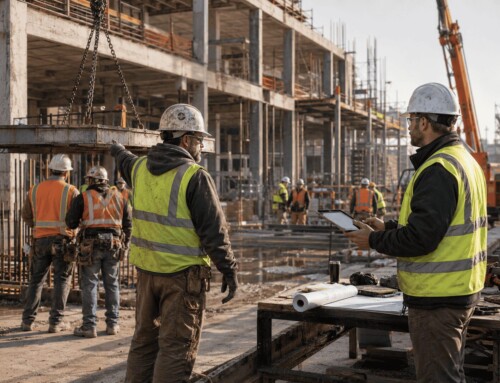
A group of construction professionals in hard hats are gathered at a job site, intently reviewing blueprints for a new manufacturing facility. This project is part of the Arizona mega projects 2026 initiative, aimed at expanding semiconductor infrastructure and creating jobs in response to global demand.

Arizona Construction Outlook Through 2026 and Beyond

By 2026, Arizona is expected to remain one of the most active U.S. markets for semiconductor, data center, and industrial construction. Ongoing phases at TSMC, Intel, Amkor, and multiple hyperscale campuses ensure sustained activity. The future pipeline extends well beyond the current cycle.

Many investments are multi-phase and multi-decade:

  • Additional TSMC fabs and support facilities already in planning for Phoenix
  • Intel’s Chandler campus positioned for continued expansion
  • Data center operators typically planning 5-10 year build-outs once land and power are secured
  • Infrastructure projects tied to population growth and industrial demand continuing into the 2030s

Potential risks and constraints include:

  • Labor availability: Particularly at senior field and project management levels, where supply remains limited relative to demand
  • Infrastructure timing: Power, water, and transportation upgrades must keep pace with private investment
  • Permitting capacity: Local agencies managing unprecedented volume of complex projects
  • Economic cycles: Technology sector shifts could alter build-out pacing, though commitments already in progress extend well beyond a single cycle

Leadership demand will not end in 2026. Subsequent phases at anchor sites will move from planning into construction, sustaining the need for experienced superintendents, PMs, and executives. Contractors and owners who invest now in building a strong leadership bench will be better positioned to win and deliver Arizona mega projects.


Considering Arizona’s Mega Project Market?

Semiconductor fabs, hyperscale data centers, and industrial mega projects are driving multi-year demand for experienced construction leaders across Phoenix and the surrounding metro. Companies are actively recruiting superintendents, project managers, and construction executives with mission-critical or industrial experience.

Explore Arizona Construction Leadership Jobs

Hiring managers building Arizona project teams can
request confidential recruiting support.

Conclusion

Arizona has become one of the most active construction markets in the United States. Semiconductor fabs, hyperscale data centers, infrastructure expansion, and advanced manufacturing projects are driving billions in investment across the Phoenix region.

TSMC, Intel, and major data center operators are building multi-phase campuses that extend well beyond 2026. These projects are not short-term cycles. They represent long-term industrial growth tied to domestic chip production, AI infrastructure, and supply chain expansion.

The opportunity for contractors is significant. But the limiting factor is leadership.

Mega projects require experienced superintendents, project managers, and construction executives who can manage complex industrial builds and fast-track schedules.

Companies that secure strong leadership teams now will be positioned to win and deliver Arizona’s next wave of mega projects. Those that wait will be competing for the same limited talent pool in one of the fastest-growing construction markets in the country.

FAQs

Why are semiconductor companies building factories in Arizona?

Arizona attracts semiconductor investment due to federal incentives from the CHIPS and Science Act, available land, and strong infrastructure. Companies like TSMC and Intel are expanding in the Phoenix region to increase domestic chip production and strengthen U.S. technology supply chains.


How much semiconductor investment is coming to Arizona?

Arizona has attracted more than $200 billion in announced semiconductor investment this decade. Major projects include TSMC’s Phoenix campus, Intel’s expansion in Chandler, and advanced packaging facilities from companies like Amkor.


Why is Phoenix becoming a major data center market?

Phoenix offers large land availability, strong power infrastructure, and low natural disaster risk. These factors make the region attractive for hyperscale cloud providers building facilities to support artificial intelligence, cloud computing, and large-scale data processing.


What construction jobs are in demand in Arizona’s mega projects?

Arizona’s mega projects are increasing demand for experienced construction superintendents, project managers, and mission-critical specialists. Semiconductor fabs, data centers, and infrastructure programs require leaders capable of managing complex industrial construction and fast-track schedules.