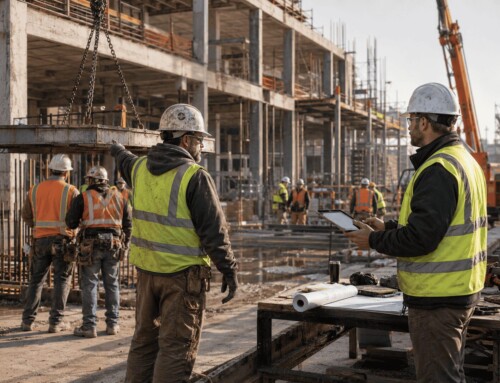
The construction industry stands at the threshold of a technological revolution that promises to transform how projects are planned, executed, and managed. Extended Reality (XR) technologies—encompassing Virtual Reality (VR), Augmented Reality (AR), and Mixed Reality (MR)—are rapidly gaining traction across construction sites worldwide, delivering unprecedented improvements in safety, efficiency, and collaboration.
This comprehensive market analysis reveals that the construction XR sector is poised for explosive growth, with projections indicating the market will more than double between 2025 and 2029. As construction companies increasingly recognize the tangible benefits of immersive technologies, from reducing costly rework to enhancing worker training, XR adoption is accelerating at an unprecedented pace.

Market Growth Projections and Key Findings
The construction Extended Reality market is experiencing remarkable expansion, with industry analysts projecting the sector will reach US$15.54 billion by 2029. This represents a dramatic increase from the current market valuation of approximately US$5.34 billion in 2024, indicating that the market size will more than double during the 2025-2029 timeframe.
The compound annual growth rate (CAGR) for the construction XR market is estimated at over 25% during the forecast period, significantly outpacing many other technology sectors. This aggressive growth trajectory reflects the construction industry’s urgent need for digital transformation solutions that can address longstanding challenges around project delays, cost overruns, and safety incidents.
Several factors contribute to this robust market expansion. Construction companies are increasingly recognizing that XR technologies offer measurable returns on investment through reduced rework rates, improved project timelines, and enhanced safety outcomes. Early adopters have reported error reduction rates of 40-60% when implementing XR-enabled clash detection and real-time BIM overlays, creating compelling business cases for broader industry adoption.
The baseline measurement of US$6.8 billion in 2024 establishes a strong foundation for this growth, indicating that XR technologies have already achieved meaningful market penetration beyond pilot projects and experimental implementations. This suggests the industry has moved past the early adoption phase and is entering a period of mainstream deployment.
Regional adoption patterns show North America and Europe leading in terms of absolute market size, while Asia-Pacific demonstrates the fastest growth rates. This geographic distribution reflects varying levels of digital infrastructure maturity, regulatory support, and cultural openness to technological innovation in construction practices.
Key Technology Applications Driving Market Expansion
The construction XR market’s rapid growth stems from diverse technology applications that address specific industry pain points. Virtual Reality solutions have emerged as powerful tools for immersive construction site planning and design visualization, enabling project teams to identify potential issues before physical construction begins. XR allows for immersive, 3D experiences that help teams visualize and interact with project designs before construction begins.
VR applications allow architects, engineers, and construction managers to conduct virtual walkthroughs of building designs, facilitating better decision-making and stakeholder alignment. Companies like Mortenson Construction have leveraged VR for client engagement and pre-construction validation, resulting in significant reductions in late-stage design changes and associated cost overruns.
Augmented Reality applications focus on real-time project monitoring and quality control, overlaying digital information onto physical construction environments. AR-enabled smart glasses, such as the Microsoft HoloLens 2 and Trimble XR10, allow field workers to access up-to-date blueprints, installation instructions, and safety protocols without interrupting their workflow.
Mixed Reality platforms enable collaborative design reviews and stakeholder engagement by merging real and virtual objects in shared environments. This technology proves particularly valuable for complex infrastructure projects where multiple teams must coordinate across different locations and time zones. XR tools enable seamless collaboration among stakeholders, including architects, engineers, and onsite workers, regardless of their location.

The integration of 3D modeling with Building Information Modeling (BIM) systems represents another crucial application driving market growth. This combination enables precise digital overlays in physical environments, allowing workers to visualize pipe runs inside completed walls or understand complex structural relationships that would otherwise be invisible. XR allows stakeholders to visualize complex designs in 3D, which helps in early detection of design conflicts and facilitates real-time collaboration.
Remote site inspection capabilities have gained prominence, particularly following the global shift toward distributed work arrangements. XR technologies enable project managers and quality inspectors to conduct thorough site reviews without physical travel, reducing costs while maintaining rigorous oversight standards.
Training simulations for construction workers and equipment operation represent a rapidly expanding application area. VR-based safety training delivers higher retention rates and measurably reduces on-site incidents compared to traditional classroom instruction, with some programs reporting incident rate reductions of up to 43%. Additionally, one company reported a 90% improvement in first-time quality by using XR training tools, highlighting the transformative potential of these technologies. XR provides realistic simulations for training workers on safety protocols and equipment operation in a controlled, virtual environment.
Market Growth Drivers and Industry Catalysts
The construction industry’s increasing demand for digital transformation serves as the primary catalyst for XR market expansion. Following significant disruptions in recent years, construction companies are actively seeking technologies that can improve resilience, efficiency, and adaptability. Extensive global infrastructure development, driven by urbanization, is a major catalyst for XR adoption in the construction sector.
Government infrastructure investments in smart city development projects create substantial opportunities for XR technology deployment. Public sector initiatives increasingly mandate digital twin documentation and advanced project management capabilities, driving demand for XR solutions that can meet these requirements. The development of smart cities requires advanced visualization and management tools, which XR provides for planning and execution.
Rising labor costs are driving automation and efficiency improvements across the construction sector. XR technologies help address skilled labor shortages by enabling more efficient training programs and allowing experienced workers to provide remote guidance to less experienced team members through AR-enabled collaboration tools.
Enhanced safety requirements following updated regulations have created additional momentum for XR adoption. Immersive training simulations allow workers to practice hazardous scenarios in risk-free environments, while AR safety overlays provide real-time hazard identification and procedural guidance on active job sites.
The growing adoption of cloud-based construction management platforms provides the infrastructure foundation necessary for sophisticated XR applications. These platforms enable seamless data integration between XR devices and existing project management workflows, reducing implementation barriers and improving user adoption.
Integration with IoT sensors and real-time data analytics capabilities enhances the value proposition of XR technologies. Construction sites equipped with environmental sensors can feed real-time data into AR interfaces, providing workers with immediate visibility into air quality, temperature, and other safety-critical conditions.

Regional Market Analysis and Opportunities
North America currently holds the largest market share at approximately 40% of the global construction XR market, driven by early technology adoption and substantial investment in research and development. The region benefits from strong venture capital ecosystems, established technology companies, and government support for innovation initiatives.
Major construction firms like Bechtel and Skanska have pioneered XR implementations in North America, creating case studies and best practices that accelerate broader industry adoption. The presence of leading technology companies such as Microsoft, Unity Technologies, and Autodesk provides a robust supplier ecosystem for XR solutions.
Europe accounts for approximately 30% of the global market share, with particularly strong focus on sustainable construction applications. European construction companies are leveraging XR technologies to meet stringent environmental regulations and achieve green building certifications, creating a distinct market dynamic compared to other regions.
The Asia-Pacific region shows the highest growth potential, with analysts projecting a 35% CAGR through 2029. This exceptional growth rate reflects rapid urbanization, massive infrastructure investments, and government policies that actively promote digital transformation in construction.
China’s designation of XR as a “future industry” has mobilized significant national and provincial research funding toward construction applications. Japanese firms like Obayashi are pioneering innovative XR implementations for remote crane operation and automated hazard detection, demonstrating the region’s technological leadership in specialized applications.
The Middle East infrastructure boom is driving significant XR technology investments, particularly in large-scale development projects that benefit from advanced project coordination and stakeholder engagement capabilities. The region’s focus on smart city initiatives creates additional demand for XR-enabled digital twin solutions.
Latin America is emerging as a key growth market for affordable XR solutions, with increasing interest from mid-sized construction firms seeking cost-effective ways to improve project outcomes. This market segment is driving innovation in entry-level XR hardware and simplified software solutions.
Leading Market Players and Competitive Landscape
Microsoft dominates the enterprise AR construction applications market through its HoloLens platform, which has achieved widespread adoption among major construction firms. The HoloLens 2’s combination of spatial mapping capabilities, ergonomic design, and enterprise-grade security features has made it the preferred choice for mission-critical construction applications.
Autodesk leads the BIM-integrated XR software solutions category, leveraging its dominant position in construction design software to create seamless workflows between design and field implementation. The company’s XR offerings integrate directly with popular platforms like Revit and AutoCAD, reducing learning curves and implementation complexity.
Unity Technologies provides development platforms for construction XR applications, enabling both large software companies and specialized startups to create industry-specific solutions. Unity’s real-time 3D development platform has become the foundation for numerous construction XR applications, from training simulations to collaborative design tools.
Trimble offers specialized construction-focused XR hardware and software solutions, including ruggedized devices designed specifically for harsh construction environments. The company’s XR10 with HoloLens technology combines Microsoft’s spatial computing capabilities with Trimble’s construction industry expertise.

Bentley Systems is expanding XR capabilities in infrastructure design, particularly for large-scale civil engineering projects. The company’s focus on digital twins and infrastructure lifecycle management creates natural synergies with XR technologies for project visualization and maintenance planning.
Emerging startups are developing niche construction XR applications that address specific industry challenges. These companies often focus on particular construction segments or workflows, creating specialized solutions that complement offerings from larger technology providers.
The competitive landscape is characterized by both horizontal platform providers and vertical solution specialists. While major technology companies provide foundational XR capabilities, construction-focused firms are developing industry-specific applications that deliver immediate value to construction professionals.
Strategic partnerships between technology providers and construction companies are becoming increasingly common, as both sectors recognize the need for deep industry expertise to create effective XR solutions. These collaborations often result in more practical, field-tested applications compared to purely technology-driven approaches.
Market Challenges and Barriers to Adoption
High initial hardware and software implementation costs represent the most significant barrier to XR adoption for smaller construction firms. Premium headsets, spatial mapping sensors, and specialized software licenses require substantial upfront investments that may be challenging for companies with limited technology budgets. However, the growing accessibility and declining costs of XR hardware are making the technology more affordable for a wider range of construction firms, gradually reducing this barrier.
Limited technical expertise and training requirements for workforce adoption create additional implementation challenges. Construction companies must invest in comprehensive training programs to ensure workers can effectively utilize XR technologies, which can extend implementation timelines and increase total cost of ownership.
Compatibility issues between different XR platforms and existing construction software complicate deployment decisions. Construction firms often use multiple software platforms for project management, design, and field operations, requiring careful integration planning to ensure XR solutions work seamlessly across all systems.
Network connectivity limitations on remote construction sites can severely impact XR application performance. Many construction projects occur in areas with limited internet infrastructure, making it difficult to support cloud-based XR applications that require reliable, high-bandwidth connections.
Data security concerns regarding cloud-based XR applications create hesitation among construction companies handling sensitive project information. The integration of real-time location data, project plans, and client information in XR systems raises legitimate concerns about data protection and competitive intelligence.
Resistance to change from traditional construction management practices remains a persistent challenge. Many construction professionals have decades of experience with established workflows and may be reluctant to adopt new technologies that significantly alter familiar processes.
Device durability and environmental suitability present ongoing challenges for XR hardware deployment in construction environments. Construction sites expose electronic devices to dust, moisture, extreme temperatures, and physical impacts that can compromise device reliability and increase maintenance costs.
Future Market Outlook and Investment Opportunities
The rollout of 5G networks is expected to accelerate XR adoption in construction by 2026, enabling more sophisticated real-time applications and seamless remote collaboration. Enhanced network capabilities will support larger datasets, higher-resolution visualizations, and more responsive user interfaces that improve the practical utility of XR technologies. The increased speed and lower latency of 5G networks are crucial for delivering high-fidelity, real-time XR experiences across large construction sites.
Artificial intelligence integration is enhancing predictive analytics capabilities within XR systems, enabling automated quality inspections, risk assessments, and progress tracking. AI-powered XR applications can identify potential safety hazards, predict equipment failures, and optimize resource allocation based on real-time site conditions.
The industry’s growing focus on sustainability is driving XR adoption for green building certification processes. XR technologies enable more accurate environmental impact modeling, energy efficiency optimization, and compliance documentation required for various sustainability standards.
Venture capital investments in construction technology reached record highs in 2024, with XR solutions receiving significant attention from investors seeking high-growth opportunities. This funding influx is accelerating product development and market expansion efforts across the construction XR ecosystem.
Expected market consolidation through strategic acquisitions and partnerships will likely reshape the competitive landscape over the next few years. Larger technology companies are acquiring specialized construction XR startups to expand their industry expertise, while construction firms are forming strategic alliances with technology providers.
Regulatory support for digital construction technologies is creating increasingly favorable market conditions. Government agencies are implementing policies that encourage or mandate digital project documentation, creating sustained demand for XR solutions that can meet compliance requirements.
The construction Extended Reality market’s trajectory toward US$15.54 billion by 2029 represents more than just technological advancement—it signals a fundamental transformation in how construction projects are conceived, executed, and delivered. As companies that embrace XR technologies gain competitive advantages through improved efficiency, safety, and quality outcomes, the pressure for industry-wide adoption will continue to intensify.
For construction companies, technology providers, and investors, the current market dynamics present a compelling opportunity to participate in this transformative growth. The combination of proven ROI, supportive regulatory environment, and improving technology capabilities suggests that XR adoption in construction will continue accelerating well beyond the 2025-2029 forecast period.