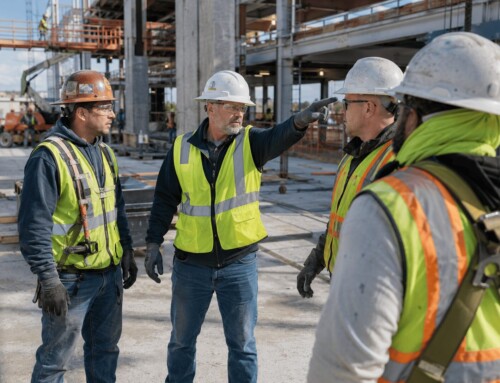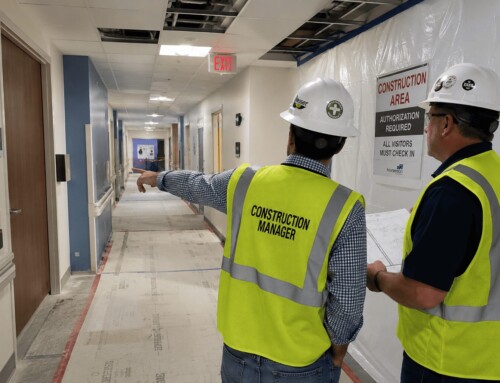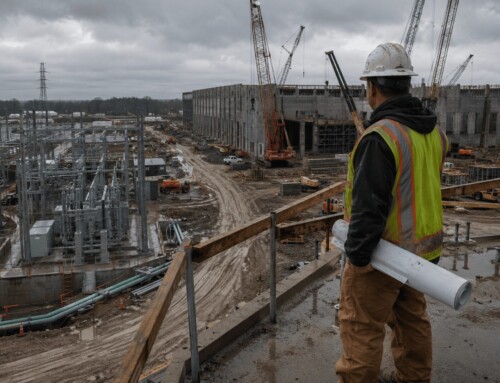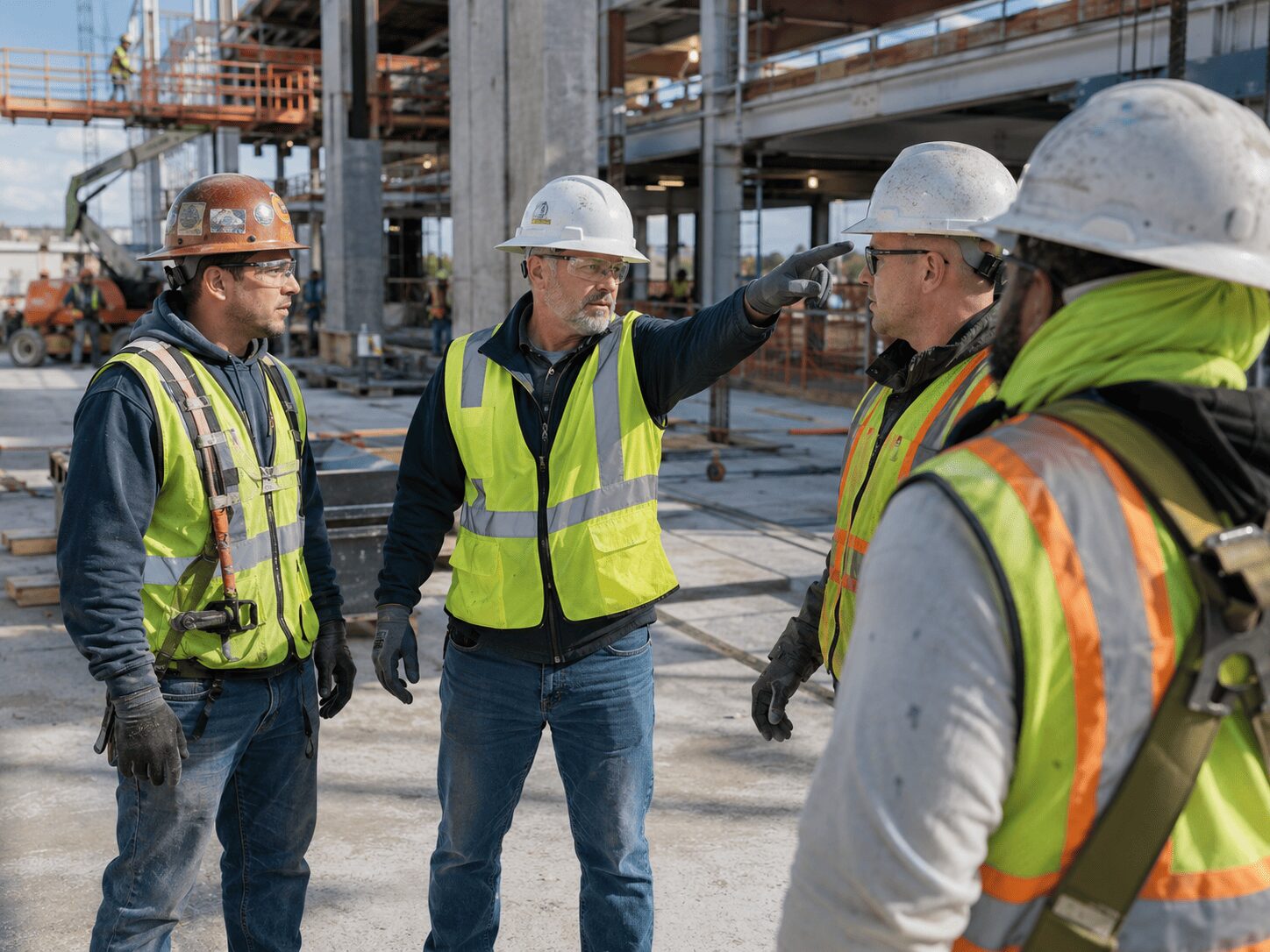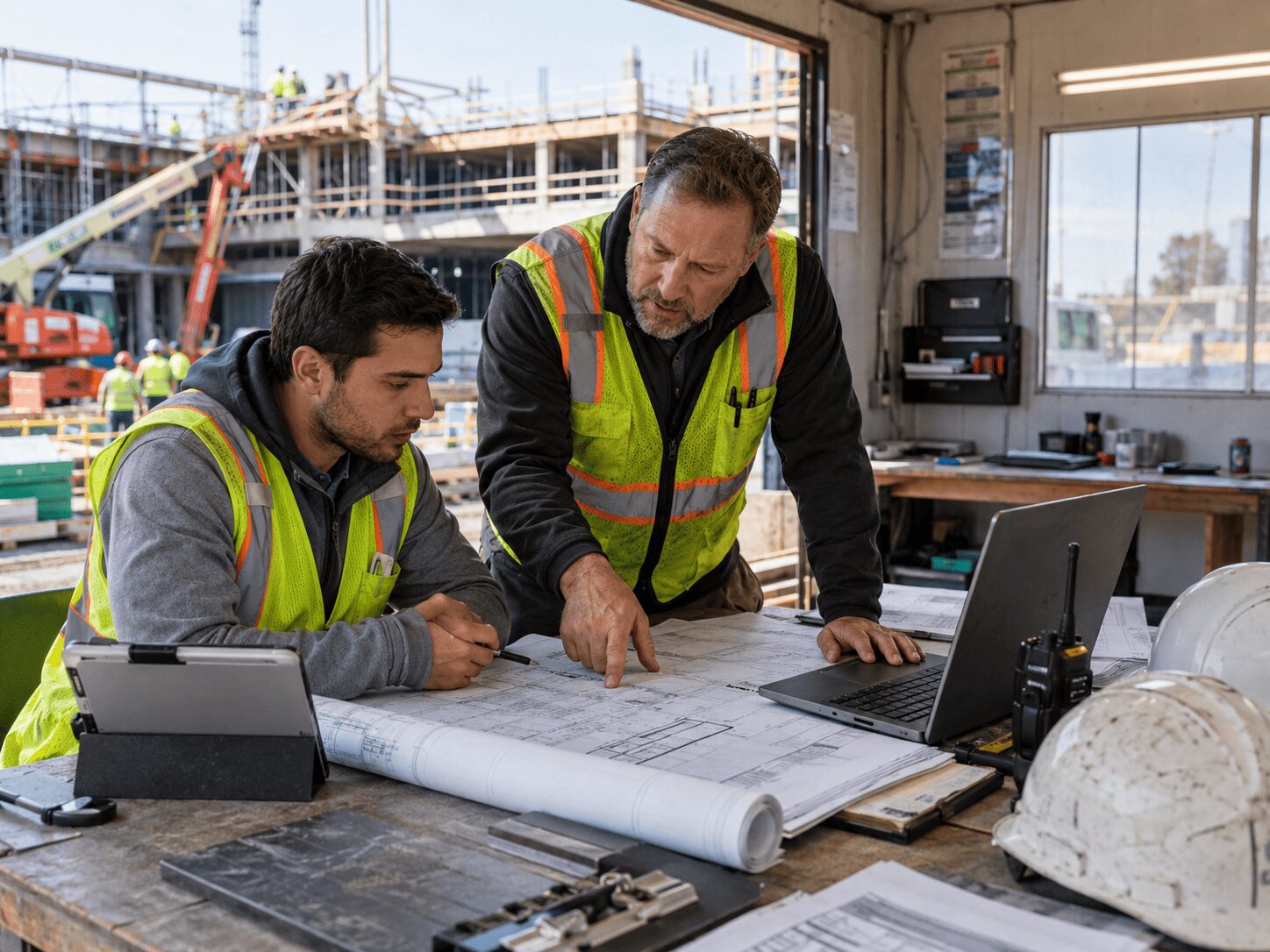
In a live hospital, the most expensive mistake a project manager can make usually has nothing to do with the budget.
A contractor rarely loses a healthcare client over a cost number. They lose it the first morning a surgical floor loses pressure, or infection prevention shuts down a corridor because containment failed, or a nurse manager stops trusting the schedule. None of that shows up on a resume. All of it can end a relationship that took years to build.
That is the part of healthcare construction project manager hiring that gets missed. Most contractors still screen healthcare PMs the way they screen commercial PMs: dollar volume, delivery method, years in the title. Those things matter. They are also the easy part.
The hard part is whether the person can build inside a working hospital without becoming the reason something went wrong in patient care. That is a different skill than running a clean ground-up job, and the resume almost never tells you who has it.
You are building inside someone else’s emergency
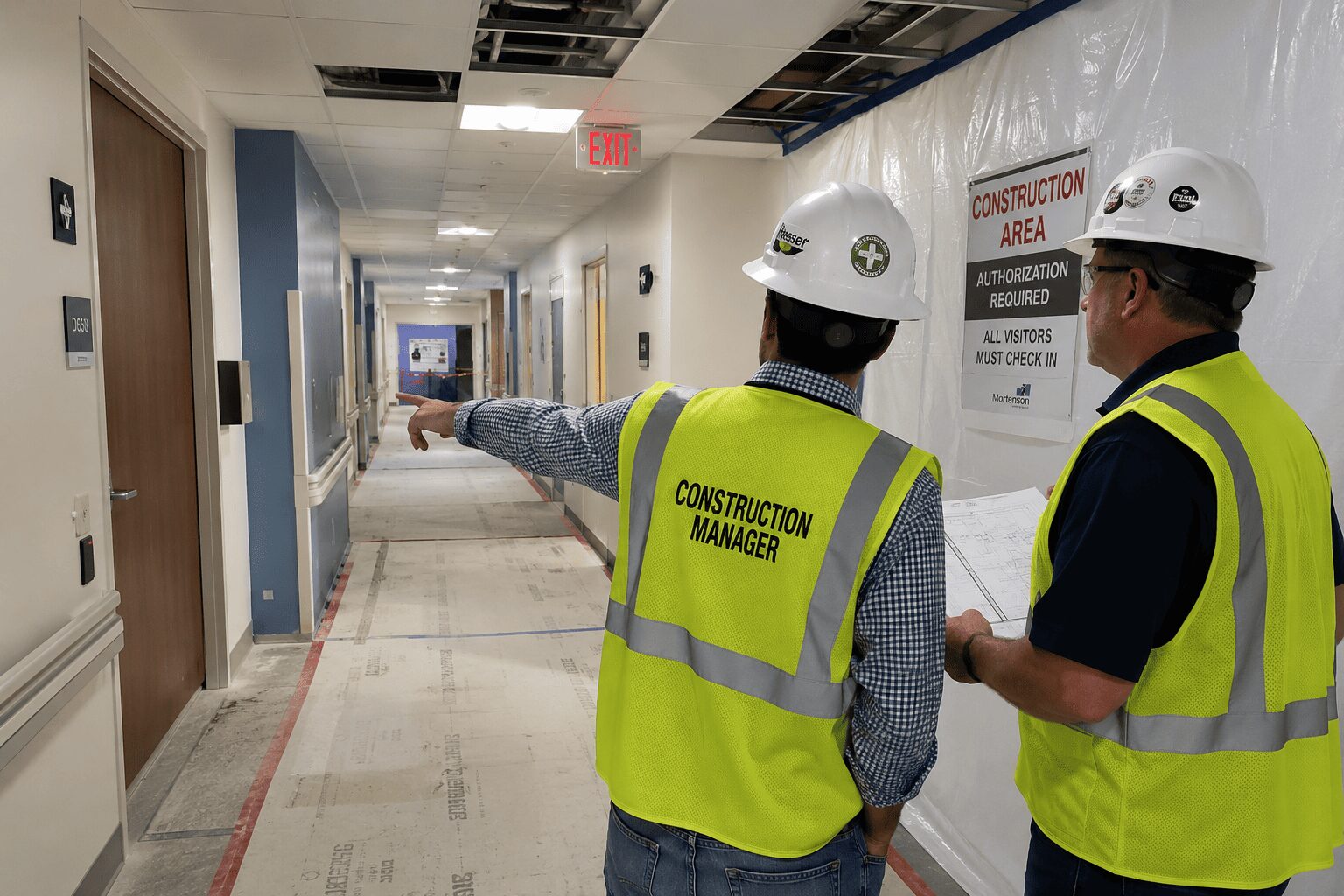
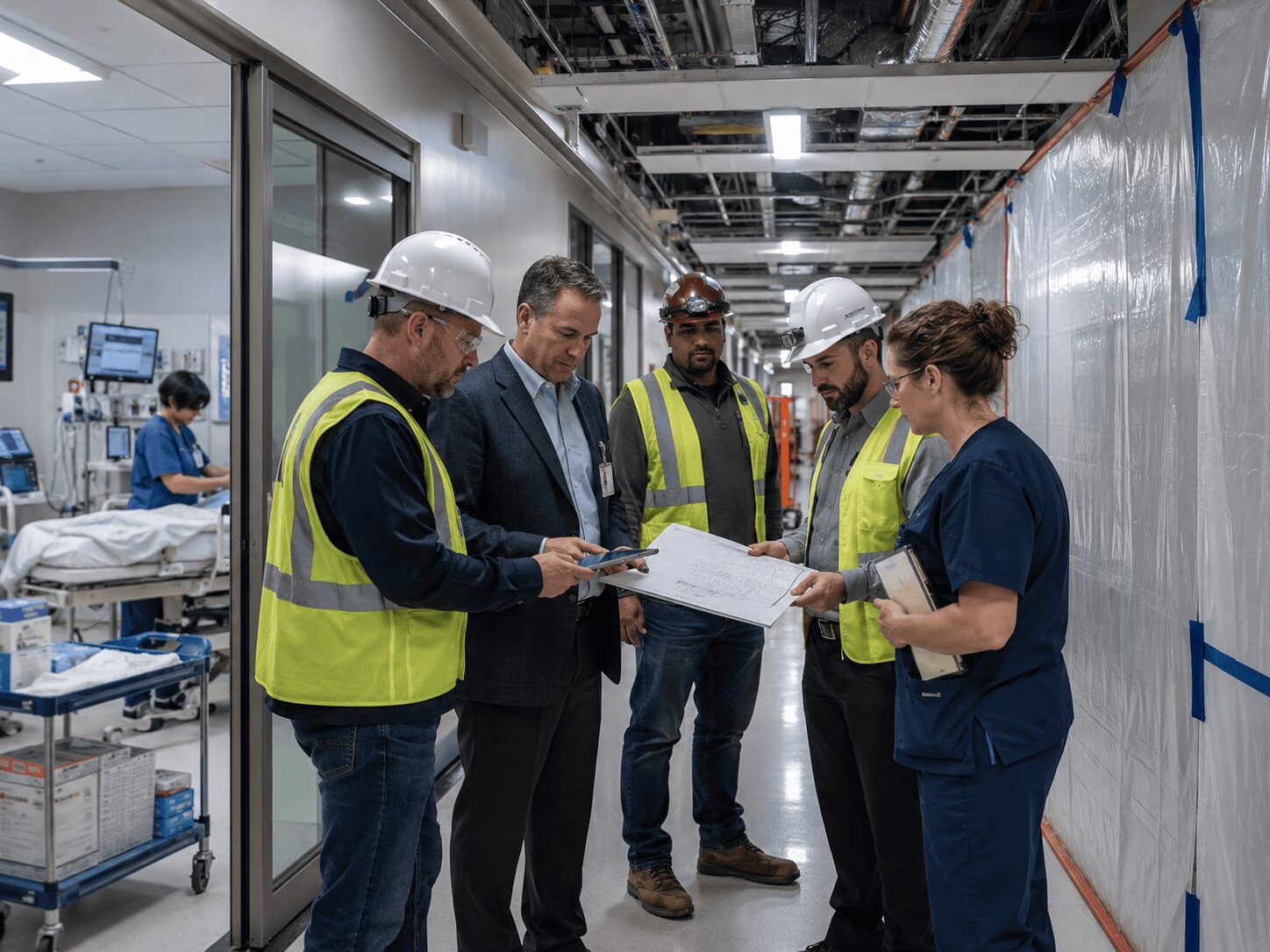
Healthcare work rarely happens in an empty box. The hardest jobs are renovations and expansions inside active hospitals, surgery centers, imaging suites, emergency departments, and occupied medical office buildings. The building keeps running. Patients keep coming. The job has to fit around all of it.
That changes what the project manager actually does. On a standard commercial project, a missed communication creates rework, delay, or a cost conversation. In an occupied healthcare facility, the same miss can move a patient through a dust cloud, shut down a sterile area, or stop a procedure. The construction risk and the operational risk sit on top of each other.
So the healthcare PM is not just managing the build. They are managing the space around it, and the people who depend on that space: facilities, infection prevention, nursing leadership, security, environmental services, life safety, and the user groups whose daily work decides whether the project keeps moving.
A commercial PM can be excellent and still be untested in that load. They know how to drive a schedule. They may have never built one around room turnovers, weekend shutdowns, containment checks, interim life safety measures, and a daily conversation with a charge nurse. The resume can look close. The fit can be a different thing entirely.
Screen for risk, not project size
Strong healthcare construction project manager hiring starts with one shift: screen the role around risk, not size. Hospital work concentrates risk in specific places.
- Infection control and containment
- Utility shutdowns and tie-ins
- Noise, vibration, and dust near patients
- Patient and staff access
- Life safety and temporary conditions
- Daily communication with clinical and facility teams
- Documentation that holds up for inspections, approvals, and owner trust
None of that is field cleanup. It is planning that shapes the PM role from the first day.
The Centers for Disease Control and Prevention recommends an infection-control risk assessment before construction, renovation, demolition, and repair work begins in healthcare facilities. ASHE publishes an ICRA 2.0 toolkit built specifically for construction, renovation, and operations planning in the healthcare environment. The Joint Commission describes a preconstruction risk assessment that covers air quality, infection control, utility needs, noise, vibration, and other hazards that can affect care and treatment.
Read together, the message to a hiring manager is simple: a healthcare PM has to carry construction risk and operational risk at once, before a shovel moves. That is a different question than “Has this person run a twenty million dollar job?” The better question is, “Has this person run a twenty million dollar renovation where the owner could not stop operating for a single day?”
ICRA and shutdowns are where the bluff gets called
Infection control and shutdown coordination are not buzzwords. They are where you find out fast whether a candidate has real healthcare experience or just adjacent commercial experience.
A PM who has lived this work understands the planning that happens before anyone cuts, drills, opens a ceiling, moves air, or touches an active system. They know the gap between a schedule that looks good in a meeting and a plan a hospital team can actually live with.
Take a renovation next to an active imaging department. On paper the scope looks routine: selective demolition, new finishes, some MEP adjustments, above-ceiling work, a few phased handoffs. The real work is more sensitive. The PM has to keep access open without crossing patient flow, set containment with infection prevention rather than around them, and sequence shutdowns with facilities so a tie-in does not land in the middle of a scan day. They have to know which tasks push noise or vibration into a space where patients are being treated, move the schedule before a change becomes a clinical problem, and document what was approved, who approved it, and what changed.
Put a strong commercial PM in that job and they will often react after the problem shows up. Put a proven healthcare PM in it and many of those problems never happen, because phasing, communication, and discipline took them off the table first. Same scope. Same dollar value. Very different outcome for the owner.
The questions that separate real fit from resume fit
Healthcare PMs should not be interviewed like general commercial PMs. Project size, delivery method, and owner type still matter, but the interview has to test how the candidate thinks under live-site pressure, which means asking for specifics instead of accepting broad claims. Ask the questions that are hard to fake.
- What occupied healthcare projects have you personally led, and what stayed open during the work?
- What containment or infection control class did the job require, and who set it?
- How did you plan and sequence shutdowns or tie-ins?
- Who did you talk to daily or weekly on the owner and clinical side?
- What went wrong, and what did you actually do about it?
- What documentation did the owner expect, and how did you keep it current?
Strong candidates answer in jobsite detail: phasing, swing space, above-ceiling access, air pressure, weekend work, and the nurse managers and facility directors they kept aligned when the plan moved. Weak candidates stay general. They say they have healthcare experience and then cannot explain the operational side of it.
That gap is the whole point. Healthcare owners remember the PM who made their life easier, and the one who made every shutdown and owner meeting feel like a risk. For a contractor building a healthcare team, a focused healthcare construction recruiting process is what separates real fit from resume fit before the wrong hire is standing on a live floor.
Price the role for the risk, not the title
A healthcare PM who can lead live-site work is not interchangeable with a general commercial PM, and pricing the role like one is its own kind of mistake. The market likes to treat “Project Manager” as a single category. In healthcare that is dangerous. A PM who has proven they can run an occupied hospital renovation, hold infection control together, and carry clinical owner communication brings something a strong ground-up PM may not have, and the offer should reflect it.
This is not about overpaying. It is about matching pay to the actual risk profile of the role. If the job involves live-site renovation, hospital coordination, evening and weekend shutdowns, complex phasing, and direct owner trust, the compensation band has to say so. Price it like a generic commercial opening and the candidate pool will come back generic too. The 2026 Construction Salary Survey is a useful starting point, then adjust for healthcare pressure, project complexity, geography, and how much operational responsibility the PM is actually carrying.
There is also a supply problem worth being honest about. PMs who are genuinely good at live-site healthcare work are not common, and the strong ones are usually already working and selective about the next move. Money is rarely what closes them. They care about owner quality, realistic phasing, field support, and whether the contractor understands what makes this work hard. The offer has to show the company gets the job, not just that it can pay for it.
A higher bar protects more than the schedule
Healthcare construction is a different operating environment, and the project manager has to protect cost, schedule, scope, safety, documentation, patient operations, and owner confidence at the same time. So the hiring has to start in a different place. Not title match, not project value alone, not the assumption that commercial renovation experience transfers cleanly onto a live hospital floor.
Start with the PM who has carried the pressure that defines the work: someone who understands ICRA and infection control, has real shutdown experience, can phase around live operations, and stays calm with owners, clear with the field, and disciplined with documentation.
For hiring managers, the move is straightforward: define the scope honestly, price the role for the risk, and interview for live-site proof. For candidates, the same truth runs the other way. Healthcare PM experience is worth more when you can explain the real complexity behind it. If you are benchmarking the market, it is worth reviewing construction project manager jobs and salary expectations before you set the bar. And if your next healthcare project needs a PM who has already led this kind of work, the conversation worth having with The Birmingham Group is about role scope, before the search starts.