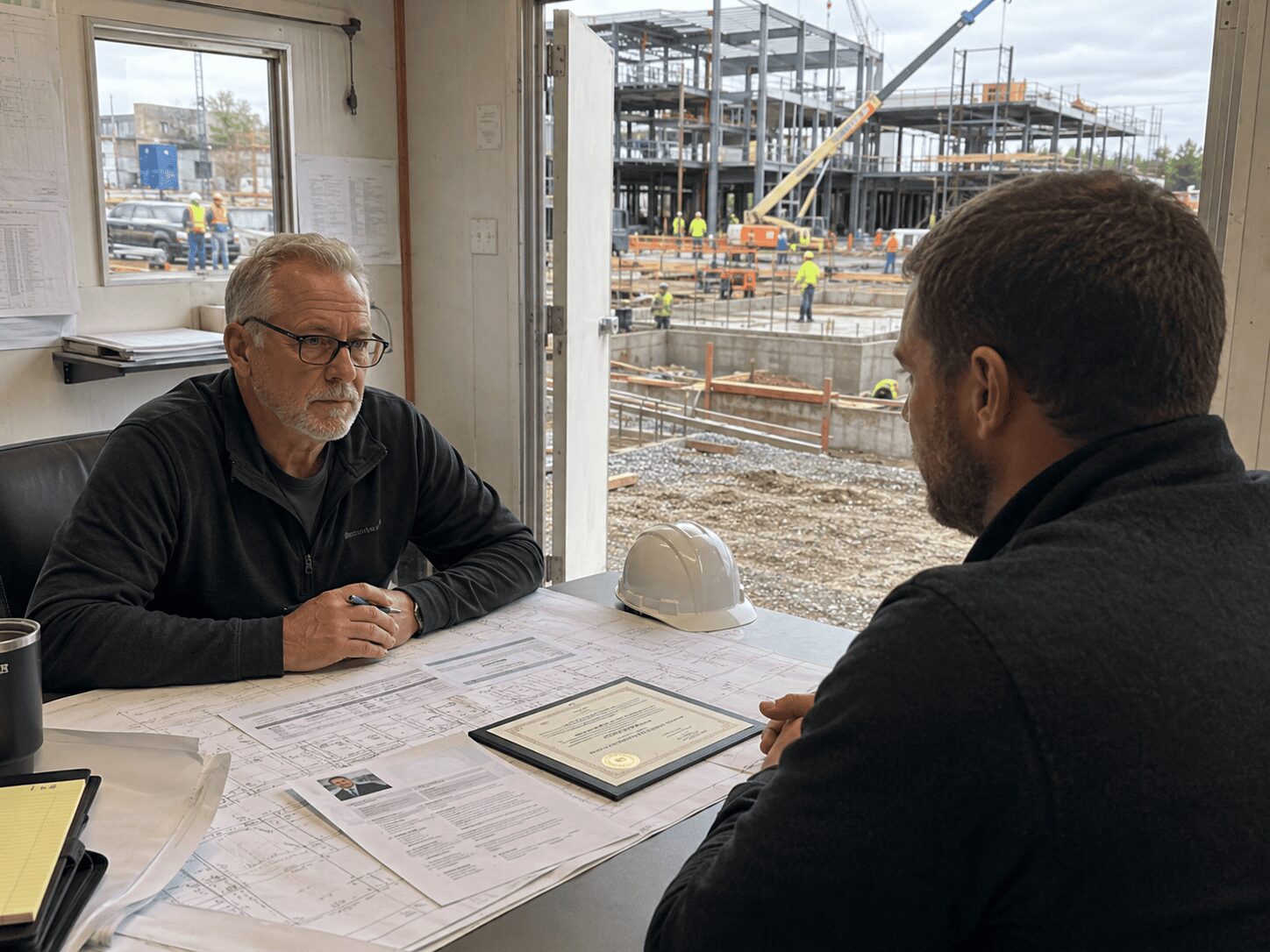

Two contractors can post the same General Superintendent title and be describing completely different jobs. One needs a strong superintendent to run a single demanding project. The other needs a field leader who can direct several superintendents, manage harder phasing, and own the recovery plan when one of those jobs starts to slip. Same title. Very different risk.
The market prices the risk, not the title. That is why Superintendent IV and General Superintendent compensation in 2026 should be read carefully, and why setting the band off an org chart is one of the more expensive habits a contractor can have.
2026 Superintendent IV and General Superintendent salary table
The table below uses the regional structure from the 2026 Construction Salary Survey. Figures are base salary benchmarks and do not include bonuses, per diem, vehicle allowances, housing, or long-term incentives.
One note on the data, because it matters more here than usual. The survey reports Superintendent IV and General Superintendent as one compensation category, so the table below is a single verified band, not two thinner tables built on a split the survey never made. That is not a gap in the data. It is the market telling you something. At this level the title stops doing the pricing and the work takes over. The table keeps the two together. The rest of this article pulls them apart so you can tell which one you are actually buying.
| Superintendent IV / General Superintendent | ||||
|---|---|---|---|---|
| Region | 20th Percentile | 80th Percentile | Mean | Median |
| Midwest | $175.25 | $211.00 | $192.37 | $192.63 |
| Mid-Atlantic | $176.37 | $225.67 | $201.13 | $202.37 |
| Northeast | $171.07 | $262.01 | $221.10 | $226.15 |
| Northwest | $167.75 | $241.67 | $218.64 | $225.05 |
| Southeast | $167.24 | $239.70 | $202.37 | $204.47 |
| Southwest | $168.34 | $236.26 | $199.78 | $202.00 |
* Salaries do not reflect bonuses, per diem, vehicle allowances, housing, or long-term incentives.
** Figures are shown in thousands. Example: $175.25 = $175,250.
For broader labor-market context, the U.S. Bureau of Labor Statistics tracks construction manager employment and wage trends, but broad occupational data does not isolate senior field leadership the way this salary survey does.
At this level, the title tells you the least
Superintendent titles are not clean across construction. One contractor uses Superintendent IV as a formal career rung. Another uses General Superintendent for the same field burden. A third reserves General Superintendent for the person who oversees several superintendents, several phases, or several jobs at once.
So title is the wrong place to start the salary conversation. The better question is simple. What does this person actually control?
A strong superintendent can own the daily execution of one project. That is already a hard job. A Superintendent IV or General Superintendent usually carries wider control: multiple field leaders, harder phasing, heavier subcontractor coordination, more owner exposure, and bigger consequences when the schedule starts to move the wrong direction.
The role is not bigger only because the project is bigger. It is bigger because the field leader is now protecting more decisions at the same time, and is expected to know when to push, when to slow the work down, when to elevate risk, and when to challenge a plan before the wrong work gets installed.
The real difference is field control, not effort
The jump into this level is a jump in field control, and it is the part contractors underestimate most.
This person is not just expected to know the work. They are expected to lead through other people. That means delegation, accountability, planning discipline, safety judgment, and the ability to keep the field moving without personally touching every issue.
Plenty of superintendents are excellent when they can drive the job themselves every day. Far fewer can run a large project or a field organization where the work is simply too big for one person to carry by effort. That is the line that matters when you set the band. Effort does not scale. Field control does.
If the company needs someone to lead other field leaders, recover schedule, handle ugly phasing, and sit across from a hard owner without losing the room, it should not price the role like a standard site superintendent. If it mainly needs one strong superintendent on one manageable job, this benchmark is the wrong one to reach for. The expensive mistake is blurring the two, because when title, salary, and real responsibility do not line up, the field is the first place it shows.
What the base salary number leaves out
Base salary is the guaranteed annual pay. At this level it is rarely the whole decision, and it is rarely the whole story about the company either.
The real offer for a senior field leader usually includes bonus, per diem, vehicle allowance or fuel card, housing or travel rotation, retirement match, and long-term incentives. Experienced leaders compare the full package, not the salary line. They have all seen a strong base wrapped around a weak job.
So they read the rest of the offer for what it admits. A vague bonus plan usually means the company has not decided what the seat is worth. Travel described as light usually is not. A role that sounds under-supported usually is. People who can lead $250M and up work already know what serious responsibility feels like, and they can hear the difference between a real opportunity and a title with a number attached. Authority, team quality, backlog, and how the company behaves when the schedule slips tell them more than the base does.
A practical example
Consider a contractor staffing a large healthcare, data center, industrial, or public-sector project. The schedule is tight. The owner is demanding. Several assistant superintendents and trade partners need direction. The project manager is already carrying cost, RFIs, submittals, change events, and owner communication.
The company calls the role Senior Superintendent because that title is easier to approve internally. The work actually needs General Superintendent leadership.
At first the gap hides. The person works hard. The team keeps moving. The job looks controlled. Then the cracks show. Field leaders below the role need more direction. Trade stacking gets harder to sequence. Shutdowns, inspections, deliveries, quality issues, and schedule recovery all start competing for the same attention. The project manager gets pulled down into field coordination that should have been handled a level higher.
The company paid for a strong superintendent and quietly expected a General Superintendent. That is not a pay problem. It is a role-design problem that turns into a pay problem, a schedule problem, and a retention problem all at once.
What hiring managers should take from the 2026 data
The biggest mistake is treating senior superintendent compensation like a title upgrade instead of a project-risk decision.
Before you set the band, answer the questions that actually price the seat. How many people will this person lead? How large and how complex is the work? How much owner exposure comes with it? And the one that matters most: what happens to the project if the field leadership is not strong enough? That last answer is the real cost of underpricing the role, and it is almost always larger than the salary you were trying to protect.
That pressure is not happening in a vacuum. The AGC/NCCER workforce survey shows how difficult hiring remains across construction, which makes senior field leadership even harder to replace when the role is mispriced.
Strong candidates test the opportunity the same way you should test the hire. They listen for project size, authority, team structure, backlog, safety culture, travel, reporting lines, and whether leadership will back them when it gets hard. If you are working with a construction recruiting partner, be ready to explain the role past the title, built around scope, authority, support, and the work the person will actually control. The contractors who can do that out loud are the ones who close senior field talent.
What candidates should take from the numbers
For candidates, the number on the page is the easy part. The real question is whether it matches what you carry.
Do not judge your value by title. Judge it by what happens when you are not there. Are you running one job or holding several together? Are other superintendents looking to you for direction? Are you the person leadership calls when a project is drifting? If the company would feel your absence across more than one project, you are likely being paid for a site superintendent while doing the work of a field leader.
That still does not mean the biggest base wins. Backlog, leadership quality, project type, travel, authority, bonus structure, and the path past this role decide whether a higher number is actually a better job. The strongest field leaders are usually the ones who know their market value cold and move only when the work, not just the offer, is clearly better.
Senior field leaders weighing their next move can also review confidential candidate resources to understand how The Birmingham Group supports construction professionals evaluating serious opportunities.
Final takeaway
Superintendent IV and General Superintendent salary in 2026 should not be priced by title alone.
The real question is what the person controls.
If the role requires senior field leadership, schedule recovery, owner pressure, and direction over other superintendents, the salary band needs to reflect that risk. If it is one strong superintendent on one project, price it honestly that way.
The contractors who win this talent will be the ones who connect pay to scope, authority, and real field control.
For hiring managers, the next step is simple: define the field burden before setting the salary band. The right compensation range depends on what the person is expected to control, not just the title on the org chart.