That is the part of the LNG and pipeline surge senior leaders need to watch most closely. The headlines are easy to understand: more LNG capacity, more pipeline movement, more demand tied to export facilities, Gulf Coast infrastructure, power growth, and industrial load.
The harder part is what happens after the announcement.
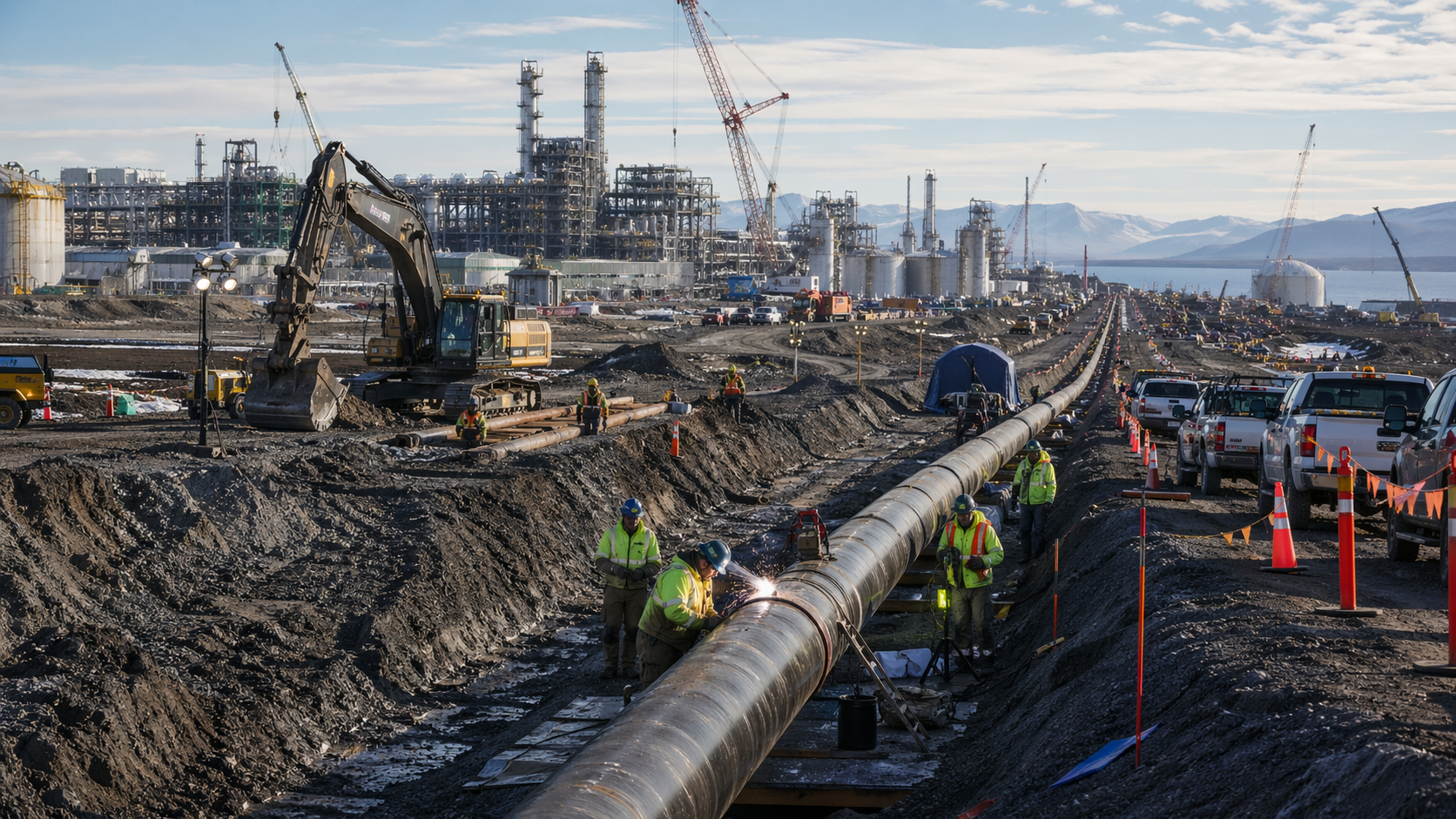
The work moves into remote corridors, travel-heavy jobsites, coastal facilities, compressor stations, access roads, tie-ins, hydrotests, and long field sequences where weak leadership gets exposed.
That is the real construction hiring outlook.
This is not just a demand story. It is a capacity story. Capacity depends on leaders who can keep difficult work moving when the site, schedule, safety plan, and stakeholders all start pushing at once.
EIA expects U.S. natural gas exports to keep rising as five LNG export projects start operations and ramp up by the end of 2027. It also forecasts LNG exports to average 17.0 Bcf/d in 2026 and rise again in 2027, with several major Gulf Coast projects tied to the next wave of capacity growth.
That movement changes the labor plan. It changes the leadership plan too.
Capacity is moving toward harder work
LNG and pipeline work does not behave like a clean commercial project in a familiar metro market.
Much of this work happens where access is harder, travel is heavier, labor depth is thinner, and one missed handoff can slow the next three steps.
EIA reported that U.S. natural gas pipeline projects completed in 2025 added about 6.3 Bcf/d of capacity, much of it aimed at the South Central region and Gulf Coast LNG demand.
Capacity is not moving on a clean map. It is moving through land, access, permits, weather, inspection requirements, landowner concerns, crew rotations, utility crossings, equipment timing, and safety exposure.
A spreadsheet can say capacity is coming. The field has to prove it.
That is where leadership becomes the separator.
A strong leader is not only tracking production. They are asking better questions before the work gets stuck.
Is the ROW ready? Are tie-in windows confirmed? Is the hydrotest plan realistic? Are safety controls built around actual site conditions? Are inspection and documentation lined up before the work front gets there?
Those questions decide whether capacity turns into progress or delay.
The field terms tell you where the risk lives
Senior decision-makers do not need to become pipeline specialists, but they do need to understand what drives field risk.
ROW means right-of-way. It is the approved corridor where the pipeline or related work can be built, accessed, operated, and maintained. No ROW control means no clean production.
A tie-in is where new work connects to an existing system or another section of work. These moments often look small on the schedule, but they carry real risk: outages, owner coordination, inspection, utility conflict, safety setup, limited work windows, and pressure from multiple parties.
A hydrotest is a pressure test used to confirm that a pipeline can hold pressure before it operates. The planning around it matters too: water source, disposal, isolation, pressure control, safety zones, inspection, documentation, and sequence.
Remote LNG and pipeline work is full of safety exposure: heavy equipment, trenching, welding, lifting, pressure testing, traffic control, travel fatigue, weather, and changing field conditions.
Weak leaders treat safety as paperwork. Strong leaders build safety into the way the job runs.
That difference shows up in production, morale, stakeholder trust, and margin.
Remote work changes the hiring profile
Remote work creates a different leadership test.
Some leaders are strong when the job is close, visible, and familiar. They can manage a known subcontractor base, a nearby vendor network, and a project where recovery options are close.
That does not always translate to LNG and pipeline work.
A travel site gives leaders less room to hide. One bad manpower call can affect production and fatigue. One late material delivery can burn a full day. One unclear handoff can send crews to the wrong front. One missed inspection can become a schedule problem.
This is why hiring strategy has to shift from title matching to field judgment.
For this market, the best leaders usually have experience with remote or travel-heavy work, energy infrastructure, pipeline or heavy civil projects, safety-sensitive environments, ROW constraints, multi-front crew coordination, stakeholder-heavy work, inspection pressure, and schedule control across distance.
A person can learn a reporting system, a company process, or a client’s preferred format. They cannot fake field judgment under pressure.
That is what senior leaders should be testing for: not just whether someone has managed work, but whether they have managed work where recovery was expensive.
Travel sites make weak planning expensive
Travel work is not an administrative detail. It is part of project execution.
Many teams treat housing, rotations, drive time, per diem, crew fatigue, and field support like side issues. On remote LNG and pipeline work, those items affect production directly.
A crew that is worn down does not perform the same. A leader stretched across too much distance misses things. A rotation plan that looks good in the office can fail in the field. A bad lodging setup can quietly damage retention.
A weak travel plan can turn compensation into a bigger issue too. If people feel the job is poorly run, money becomes the only reason to stay. That puts more pressure on pay, per diem, overtime, and replacement cost.
This is where retention and execution connect.
Good leaders keep people steady by removing friction. They communicate clearly. They make the work feel controlled. They solve problems before crews lose confidence.
Replacing a proven field leader on remote work is not like filling a local office seat. The search takes time. The ramp-up takes time. The team feels the gap. The job absorbs the cost.
Travel work punishes casual hiring.
Stakeholder pressure is part of the job
LNG and pipeline work sits between a lot of people.
Owners want dates. Operators want reliability. Regulators want compliance. Landowners want access respected. Communities want safety and communication. Contractors want production and margin.
The field leader has to operate inside all of that.
Stakeholder requirements shape the work path. A crew cannot clear without access. A tie-in cannot happen without the right window. A test cannot proceed without the right controls. Documentation cannot wait until the end.
The best leaders do not complain that stakeholders slow the job down. They plan around them early, communicate clearly, and keep the field from being surprised.
That is a leadership skill. It is also a hiring filter.
A practical field scenario
Picture a pipeline spread tied to a larger LNG capacity program.
The route is active, but not clean. Rain has softened one section. A landowner issue is still open. A tie-in window is coming. Hydrotest planning is two weeks out. The crews are ready, but the sequence is fragile.
A weak leader treats those as separate problems.
A strong leader sees the chain.
Access affects crew movement. Crew movement affects production. Production affects the tie-in. The tie-in affects testing. Testing affects turnover. Turnover affects the date everyone is chasing.
That leader does not wait for the problem to mature. They escalate the land issue, adjust the work front, confirm inspection coverage, pressure-check the hydrotest plan, and reset the daily huddle around tomorrow’s constraint, not yesterday’s production number.
That is the kind of leadership that keeps hard work from becoming recovery work.
What senior decision-makers should do now
The LNG and pipeline surge should force a harder look at leadership depth.
Not just headcount. Not just open roles. Not just who is available.
The better question is this:
Do we have enough leaders who can run remote, safety-sensitive, stakeholder-heavy work without constant rescue from the top?
A contractor can have backlog and still be exposed. A team can have manpower and still lack the field leadership needed to turn capacity into progress.
This is where the construction hiring outlook gets more serious.
The next wave of LNG and pipeline work will favor companies that know what kind of leaders they need before the schedule forces the issue.
A stronger hiring strategy should focus on four things: field-tested leadership, remote execution discipline, safety credibility, and stakeholder maturity.
For hiring managers, this is where construction recruiting has to be tied to project risk. The goal is not to fill a seat. The goal is to protect the work.
The clear takeaway
LNG and pipeline capacity is moving.
That movement will create opportunity. It will also expose leadership gaps.
Remote work does not forgive weak planning. Safety-sensitive work does not forgive poor communication. Stakeholder-heavy work does not forgive sloppy handoffs. Capacity growth does not mean much if the construction teams behind it cannot execute.
The companies that win this next phase will not be the ones chasing every project. They will be the ones honest enough to ask whether they have the leaders to run the work.
If your LNG, pipeline, or energy infrastructure work depends on field leaders who can manage remote execution, safety, and stakeholder pressure, start the leadership conversation before the schedule starts making decisions for you.