
Construction Executive Hiring Mistakes That Cost Contractors Their Best Leaders
Most construction executive hiring mistakes happen long before a candidate declines an offer or a new hire walks off the job. They start with vague role definitions, slow internal processes, and weak communication that signal to experienced leaders this isn’t the right opportunity. By the time you realize the search has stalled, your top candidates have already accepted offers elsewhere.
The Birmingham Group, a construction executive search firm founded in 1967, has partnered with general contractors, specialty contractors, and developers across commercial, industrial, healthcare, education, infrastructure, and multifamily sectors. Over decades of executive recruitment, we’ve seen the same costly hiring mistakes repeat—and we’ve helped clients avoid them.
This article focuses on leadership roles that drive project success: Project Executive, Senior Project Manager, Superintendent, Preconstruction Director, and Operations Leader. Each of these positions sits at the intersection of financial performance, safety, schedule, and client relationships.
The goal here is straightforward. Whether you’re an owner, HR leader, or operations executive, you need to recognize where your construction leadership hiring process breaks down—and when it makes sense to partner with construction executive recruiters who specialize in this market.
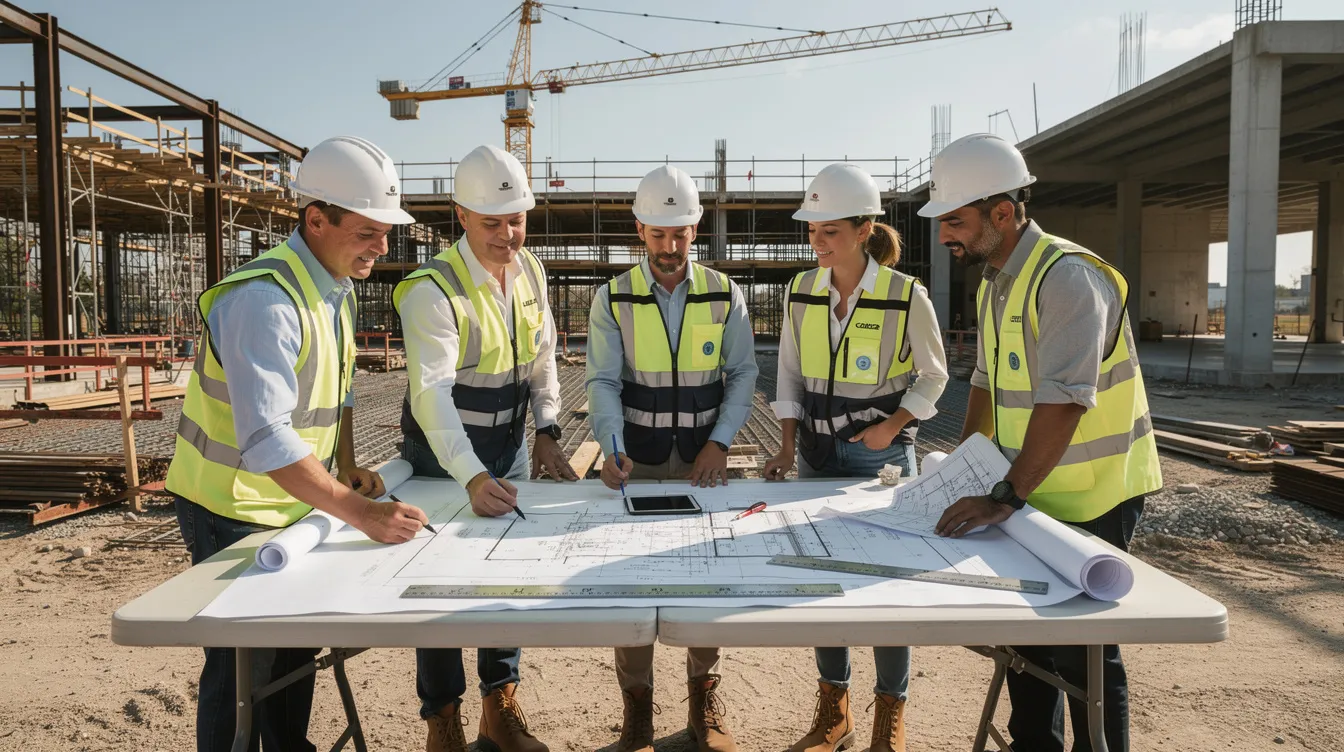
Why Hiring Construction Executives Is Different
Construction leadership hiring carries uniquely high stakes. Each executive you bring on controls tens of millions of dollars in backlog, manages complex schedules, shapes safety culture, and owns client relationships that determine whether you win repeat work.
Roles like Project Executive, Senior Project Manager, and Operations Leader directly control margin protection, change order strategies, and client retention on projects ranging from $20M renovations to $200M+ ground-up builds. A bad hire at this level doesn’t just slow down one project—it creates ripple effects across your entire portfolio.
Superintendents drive day-to-day site execution, safety culture, productivity, and subcontractor coordination. As construction projects become more complex through 2025 and beyond, expectations include digital literacy (BIM/VDC coordination), familiarity with evolving safety regulations, and the ability to lead multi-trade teams under schedule pressure.
Preconstruction Directors influence win rates, precon budgets, and feasibility decisions that shape the next 3–5 years of a contractor’s backlog. Their judgment on risk, scope, and pricing determines whether projects deliver profit or losses before ground is ever broken.
When construction executive hiring mistakes occur at these levels, the consequences show up as schedule slippage, safety incidents, rework, and damaged reputation across commercial, healthcare, and industrial projects.
Why do clients bring The Birmingham Group in specifically for construction executive search?
- Access to passive candidates who aren’t responding to job posting platforms but will take a call from a trusted recruiter about the right opportunity
- Deep understanding of project types, delivery methods (self-perform vs. CM-at-risk), and regional salary expectations that general recruiters simply don’t have
The Most Common Construction Executive Hiring Mistakes
Many contractors repeat the same leadership hiring errors year after year. They react too late, overvalue technical skills, and run inconsistent processes that frustrate candidates and leave critical roles open for months.
This section breaks down specific construction executive hiring mistakes and how they show up with roles like project executives, senior PMs, superintendents, and preconstruction leaders. Recognizing these patterns is the first step toward avoiding them.
Hiring Too Late in the Project Cycle
The most common scenario: a contractor waits until a major project is already awarded—or worse, already mobilized—before starting the search for a Project Executive or Senior Project Manager.
The consequences are predictable: rushed offers, limited candidate pools, and overloaded existing leaders trying to cover gaps. For 2025–2027 project schedules and margins, this pattern creates compounding risk.
Consider a $150M healthcare project that starts without a dedicated Project Executive. The existing operations team scrambles to provide coverage, buy-out decisions get delayed, subcontractor relationships suffer, and schedule compression leads to overtime, rework, and margin erosion. What should have been a profitable project becomes a cautionary tale.
- Leadership roles sitting open 90+ days while projects ramp, forcing patchwork coverage from already-stretched staff
Practical alternatives exist:
- Build workforce planning 6–12 months ahead, tied to your projected backlog and win rates
- Create succession planning for retiring leaders—Baby Boomer departures are accelerating
- Start construction project executive hiring at shortlist or BAFO stage, not after notice to proceed
The hiring process should begin 4–6 months before mobilization for PM and superintendent roles. Anything less compresses your options and increases risk.
Prioritizing Technical Skills Over Leadership Ability
Many firms promote their “best PM” or “strongest superintendent” into executive roles based almost entirely on technical competence and project knowledge. The assumption is that someone who excels at managing RFIs and schedules will naturally excel at leading teams and portfolios.
That assumption fails regularly.
Missing leadership competencies include coaching project managers, developing assistant superintendents, handling owner conflict, and aligning field operations with corporate strategy. These soft skills determine whether an executive builds a high-performing team or creates turnover.
What to test in interviews for leadership versus pure technical talent:
- Ask about a time they turned around a distressed project by leading others, not just solving technical problems personally
- Probe how they’ve mentored junior staff and what happened to those people’s careers
- Explore how they handle conflict with owners or trade partners under schedule pressure
- Assess their decision making style when facing competing priorities across multiple projects
In sectors like healthcare or industrial construction, stakeholder complexity makes leadership ability more critical than personal technical brilliance. A Project Executive who can manage an owner, architect, CM, and regulatory agency simultaneously creates more value than one who can personally solve every RFI.
Running an Unstructured Hiring Process
An unstructured interview process looks like this: inconsistent interview panels, no scorecards, random questions that vary by interviewer, and “gut feel” decisions made after a single conversation.
The risks are significant. Bias creeps in. Operations and HR misalign on priorities. Candidates perceive the company as disorganized or indecisive—and withdraw before you can make an offer.
A staged process for construction executive recruitment should include:
- Initial recruiter screen focused on compensation expectations, relocation, and career goals
- Leadership interview with Operations and HR to assess strategic thinking and cultural alignment
- Field credibility discussion with another Project Executive or Superintendent
- Reference checks tied to measurable outcomes (margin, safety metrics, schedule recovery)
Include a written scorecard for each role, covering measurable outputs from the past 3–5 years:
- Margin performance on completed projects
- Safety record and incident rates
- Schedule recovery on challenging jobs
- Team retention under their leadership
Construction recruiting firms like The Birmingham Group often help clients design or refine this structured evaluation to prevent repeated hiring failures and reduce the risk of a poor hire.
Failing to Communicate the Opportunity Clearly
Vague or generic job description language—“We’re a growing GC looking for a strong leader”—fails to attract top construction executives who have multiple options in today’s market.
Senior candidates want specifics. Before investing energy in your interview process, they need to understand:
- Size and type of current backlog
- Typical project size ($20M vs. $200M)
- Team structure and direct reports
- Decision-making authority and autonomy
- Realistic career path and growth potential
Under-selling or over-selling creates different problems. Promise autonomy, resources, or growth that don’t match reality, and your new hire leaves within 12 months. Downplay the opportunity, and top candidates never engage.
For roles like Project Executive, Preconstruction Director, or Operations Leader, include:
- Specific sectors and project types (healthcare, industrial, commercial)
- Geographic scope and travel expectations
- Reporting structure and hiring authority
- Company culture and leadership style
Construction executive recruiters help craft transparent, compelling narratives that differentiate your firm. The goal is attracting candidates who genuinely fit—not maximizing applicants who will filter themselves out later.
Ignoring Cultural and Team Fit
Cultural fit in construction leadership recruitment means alignment with pace, decision style, risk tolerance, and communication norms—not shared hobbies or personality.
A highly corporate leader from a national CM may struggle in a fast-moving, entrepreneurial regional GC. The reverse is equally true. An executive accustomed to autonomous decision making may chafe under layers of corporate approval.
Concrete contrasts help identify fit:
- How does the candidate handle conflict with superintendents under schedule pressure?
- What’s their approach when an owner pushes unrealistic timelines?
- How do they balance company culture standards against field realities?
Involve future peers—other Project Executives, Senior PMs, or Superintendents—in at least one interview. They’ll assess team chemistry and working style in ways that operations leadership cannot.
Poor cultural fit at the executive level often manifests as turnover among their direct reports. If PMs, supers, and project engineers start leaving within 12–24 months of a new executive’s arrival, ignoring cultural fit was likely the root cause.
Moving Too Slowly With Strong Candidates
Experienced construction executives are typically passive candidates approached by multiple firms. Long delays between interviews and offers almost always lose them to faster-moving competitors.
Top leaders expect clear next steps within 48–72 hours of an interview. Offers should come within 1–2 weeks for critical roles. Anything slower signals indecision or lack of interest.
Common internal bottlenecks include:
- Waiting for every executive to be available for in-person interviews
- Indecision around compensation bands
- Restarting the search to “see a few more resumes” when a strong finalist is already engaged
Before launching a construction executive search, establish:
- Defined interview windows with pre-committed schedules from decision-makers
- Decision deadlines after final interviews
- Pre-approved compensation ranges to avoid last-minute negotiations
Construction executive recruiters help keep processes on track, manage candidate expectations, and prevent losing talent to competitors who move faster.

Why Executive Hiring Is Hard in Construction
The difficulty isn’t just about your internal process. Structural market factors make construction leadership hiring genuinely challenging.
The aging workforce continues to reshape the talent pool. Baby Boomer superintendents, project executives, and operations leaders have been retiring at accelerating rates since 2020. Their departure creates gaps in both experience and mentorship for the next generation.
The supply of executives who have successfully led portfolios of $100M+ annually is limited—especially in regulated sectors like healthcare (OSHPD, HCAI), life sciences, and infrastructure. In California, superintendents with DSA regulatory experience are scarce enough that some firms have delayed project starts when they couldn’t find qualified leaders.
Competition between contractors intensifies the challenge:
- National CMs with deep pockets and brand recognition
- Strong regional firms offering culture and autonomy
- High-growth design-build contractors promising rapid advancement
Market demand factors compound the shortage. Large capital programs in healthcare, higher education, and manufacturing through 2025 and beyond all need seasoned superintendents and project executives.
Why internal HR alone struggles with this segment:
- Many high-potential leaders are passive—they’re not browsing job posting sites
- Construction talent at the executive level responds to trusted construction executive recruiters with niche networks, not generic outreach
- Compensation benchmarking requires sector-specific data that general HR rarely has
- Vetting leadership ability (versus technical skill) requires industry-specific interview approaches
How Construction Executive Recruiters Help Contractors Avoid These Mistakes
Specialized construction recruiting firms like The Birmingham Group focus exclusively on identifying, engaging, and vetting senior construction leaders. This isn’t general staffing—it’s targeted executive recruitment for Project Executives, Senior PMs, Superintendents, Preconstruction Directors, and Operations Leaders.
The value starts with passive candidate networks. Over decades, specialized recruiters build relationships with leaders who are successful in their current roles but open to hearing about the right opportunity. These candidates would never apply to a job posting, but they’ll take a call from a recruiter they trust.
Industry specialization matters. Understanding self-perform versus CM-at-risk, union versus open-shop, and sector nuances (hospital work, mission-critical, K–12, multifamily) allows recruiters to vet true fit before presenting candidates. A Project Executive who thrived in ground-up commercial may not translate to occupied healthcare renovation.
Faster hiring timelines result from prequalifying candidates on compensation, relocation, sector fit, and leadership style. Hiring managers see a curated shortlist, not a stack of unvetted resumes.
Leadership vetting goes deeper than résumé review:
- Behavioral interviews exploring real world scenarios
- Portfolio reviews examining actual project outcomes
- Reference checks that verify margin improvement, schedule recovery, safety performance, and client satisfaction
Additional value includes:
- Market salary benchmarking based on current construction industry data
- Offer strategy advice to close candidates without overpaying
- Confidential outreach when replacing underperforming leaders
Typical executive search timelines with specialized recruiters: 60–90 days from kickoff to accepted offer. Direct hiring efforts often stretch to 90–120 days or longer.
Signs Your Company Needs a Construction Executive Recruiter
Not every role needs an external search. But certain patterns signal when a specialized construction executive search partner becomes essential.
Leadership roles open for 90+ days—especially Project Executives, Senior Project Managers, Superintendents, and Preconstruction Directors—represent a major red flag. Every month a critical position sits empty costs money through inefficiency, missed opportunities, and overloaded staff.
Repeated hiring failures tell a similar story. If leaders leave within 12–18 months, or projects repeatedly underperform under the same manager, your hiring process has a systemic problem that won’t fix itself.
Growth outpacing your leadership bench creates urgent needs. New offices, sectors, or geographies coming online without seasoned operations leadership to support them set projects up for failure.
Difficulty attracting senior candidates—even with competitive pay—signals market positioning issues. Few qualified applicants, or consistently losing finalists to competitors, suggests your opportunity isn’t resonating with top talent.
Signs it’s time to call a construction executive recruiter:
- Critical leadership role open more than 60–90 days
- Recent executive hires failing within 18 months
- Expansion plans without leadership bench to support them
- Strong candidates consistently choosing competitors
- Internal HR stretched thin or lacking sector expertise
- Confidential replacement needed for underperforming leader
- Key retirements approaching with no succession plan
The Birmingham Group partners with contractors to diagnose these issues and build a construction leadership hiring strategy tailored to their region and sectors.

Final Thoughts
Construction executive hiring mistakes—late searches, unstructured processes, and weak communication—erode project performance, company growth, profitability, and long-term client relationships. The cost of a failed executive hire often runs 3–5 times that leader’s annual salary when you factor in turnover, disruption, and diminished performance across their portfolio.
A deliberate construction leadership hiring strategy isn’t optional. Waiting until projects are awarded, promoting based on technical skills alone, or running inconsistent interview processes creates predictable failures that many firms repeat year after year.
Partnering with experienced construction executive recruiters helps contractors build a reliable bench of project executives, senior PMs, superintendents, and preconstruction leaders. The investment in a structured search process pays for itself in reduced turnover, stronger project outcomes, and a leadership team positioned for 2025 and beyond.
Evaluate your current executive hiring process honestly. If critical roles are sitting open, if recent hires haven’t worked out, or if you’re struggling to attract the caliber of leaders your backlog demands, consider working with The Birmingham Group for your upcoming leadership searches.
Frequently Asked Questions About Construction Executive Hiring
This FAQ section addresses common questions contractors ask about construction leadership recruitment and working with construction recruiting firms. Each answer is aimed at owners, operations leaders, and HR professionals responsible for filling critical leadership positions.
What does a construction executive recruiter do?
A construction executive recruiter specializes in identifying, engaging, and vetting senior construction leaders—Project Executives, Senior PMs, Superintendents, Preconstruction Directors, and Operations Leaders.
The process includes market mapping to understand available talent, confidential outreach to passive candidates, structured interviews to assess leadership ability, reference checks tied to measurable outcomes, and coordination of the entire interview and offer process.
Firms like The Birmingham Group bring industry-specific insight into project types, delivery methods, and regional salary expectations. This differs from general recruiting through depth of network, focus on leadership hiring, and long-term relationships with both clients and candidates.
Why is it hard to hire construction executives?
Several factors converge to make executive hiring difficult. The supply of leaders who have successfully run complex, high-risk projects is limited. Demographic shifts—particularly Baby Boomer retirements—have accelerated talent shortages since 2020.
Many qualified executives are not active job seekers. They respond to trusted construction executive search partners, not job boards. Competition among contractors for proven talent drives up compensation expectations and extends search timelines.
Project cycles and geographic constraints further narrow the pool. Executives with the right sector experience (healthcare, industrial, infrastructure) and willingness to relocate or travel are genuinely scarce.
When should a contractor use a construction recruiting firm?
Typical triggers include critical roles open more than 60–90 days, confidential replacements, new market entries, or previous searches that failed to produce quality hires.
Contractors also benefit from construction recruiting firms when they need access to passive candidates or want to benchmark compensation packages against current market data.
Executive-level searches—Project Executives, Operations Leaders, Preconstruction Directors—particularly benefit from specialized construction leadership recruitment support. Engaging a recruiter early, before the project start date or market expansion, produces the best outcomes.
How long does it take to hire a construction executive?
A focused construction executive search typically takes 6–12 weeks from kickoff to accepted offer, depending on role, location, and complexity.
The timeline breaks down roughly as follows:
| Stage | Timeline |
|---|---|
| Intake and sourcing | 1–2 weeks |
| Interviews | 2–4 weeks |
| Final selection, references, offer negotiation | 1–2 weeks |
Highly specialized roles or challenging locations may extend timelines. However, processes shorten significantly with proactive planning, decisive internal processes, and pre-approved compensation ranges.
Working with experienced construction executive recruiters compresses the timeline without sacrificing quality, thanks to existing candidate networks and structured search methodology.
Frequently Asked Questions About Construction Executive Hiring
How do construction companies hire executive-level leaders?
Construction companies typically hire executive-level leaders through specialized construction executive recruiters, industry referrals, and internal promotions. Many experienced project executives, operations leaders, and senior superintendents are passive candidates, meaning they are not actively applying for jobs. Contractors often rely on construction recruiting firms to reach these leaders through industry networks and confidential outreach.
What roles are considered construction executives?
Construction executive roles commonly include Project Executive, Operations Manager, Preconstruction Director, Senior Project Manager, and senior Superintendents. These professionals oversee project portfolios, manage teams, protect profit margins, and maintain client relationships across multiple construction projects.
How long does it take to hire a construction executive?
Hiring a construction executive typically takes between six and twelve weeks depending on the role, sector, and location. Searches may take longer when contractors require leaders with specialized experience in areas such as healthcare construction, infrastructure, or mission-critical projects.
Why do construction executive searches fail?
Construction executive searches often fail because of slow hiring processes, unclear role definitions, unrealistic compensation expectations, or inconsistent communication with candidates. Experienced construction leaders frequently have multiple opportunities, so delays or disorganized interview processes often cause contractors to lose strong candidates to faster-moving competitors.
Frequently Asked Questions About Construction Executive Hiring
How do construction companies hire executive-level leaders?
Construction companies typically hire executive-level leaders through specialized construction executive recruiters, industry referrals, and internal promotions. Many experienced project executives, operations leaders, and senior superintendents are passive candidates, meaning they are not actively applying for jobs. Contractors often rely on construction recruiting firms to reach these leaders through industry networks and confidential outreach.
What roles are considered construction executives?
Construction executive roles commonly include Project Executive, Operations Manager, Preconstruction Director, Senior Project Manager, and senior Superintendents. These professionals oversee project portfolios, manage teams, protect profit margins, and maintain client relationships across multiple construction projects.
How long does it take to hire a construction executive?
Hiring a construction executive typically takes between six and twelve weeks depending on the role, sector, and location. Searches may take longer when contractors require leaders with specialized experience in areas such as healthcare construction, infrastructure, or mission-critical projects.
Why do construction executive searches fail?
Construction executive searches often fail because of slow hiring processes, unclear role definitions, unrealistic compensation expectations, or inconsistent communication with candidates. Experienced construction leaders frequently have multiple opportunities, so delays or disorganized interview processes often cause contractors to lose strong candidates to faster-moving competitors.
Frequently Asked Questions About Construction Executive Hiring
How do construction companies hire executive-level leaders?
Construction companies typically hire executive-level leaders through specialized construction executive recruiters, industry referrals, and internal promotions. Many experienced project executives, operations leaders, and senior superintendents are passive candidates, meaning they are not actively applying for jobs. Contractors often rely on construction recruiting firms to reach these leaders through industry networks and confidential outreach.
What roles are considered construction executives?
Construction executive roles commonly include Project Executive, Operations Manager, Preconstruction Director, Senior Project Manager, and senior Superintendents. These professionals oversee project portfolios, manage teams, protect profit margins, and maintain client relationships across multiple construction projects.
How long does it take to hire a construction executive?
Hiring a construction executive typically takes between six and twelve weeks depending on the role, sector, and location. Searches may take longer when contractors require leaders with specialized experience in areas such as healthcare construction, infrastructure, or mission-critical projects.
Why do construction executive searches fail?
Construction executive searches often fail because of slow hiring processes, unclear role definitions, unrealistic compensation expectations, or inconsistent communication with candidates. Experienced construction leaders frequently have multiple opportunities, so delays or disorganized interview processes often cause contractors to lose strong candidates to faster-moving competitors.