

Texas Construction Executive Compensation & Hiring Outlook 2026
Texas has entered 2026 as one of the most aggressive commercial construction and infrastructure markets in the United States. Massive public infrastructure programs, private-sector data center development, advanced manufacturing facilities, renewable energy projects, and large-scale commercial builds are all expanding at the same time. This multi-sector growth has created one of the tightest executive labor markets Texas contractors have ever faced.
For hiring managers at commercial contractors, this is no longer a standard recruiting cycle. Executive hiring now directly impacts backlog execution, margin protection, safety outcomes, and long-term enterprise value. For construction leaders and executives, Texas has become one of the strongest long-term earning markets in the country. National salary trends reflected in the 2025 Construction Industry Salaries report now place Texas among the most competitive leadership markets alongside Florida and the Midwest industrial corridor.

Texas consistently ranks among the states with the largest construction volume according to national industry tracking from Engineering News-Record (ENR) and federal labor data from the U.S. Bureau of Labor Statistics. The state’s ability to attract corporate relocations, logistics hubs, semiconductor production, and cloud infrastructure investments has pushed executive demand well beyond traditional regional benchmarks.
Construction executive hiring in Texas is now directly tied to the same inflationary wage pressure outlined in How Inflation Pushed Construction Salaries Higher. Leadership compensation, incentive structures, and equity participation have all increased as firms compete to protect high-value project pipelines.
How Can We Help You?
For Construction Professionals: Ready to take the next step into executive leadership? Speak with a construction recruiter or review current leadership openings.
For Hiring Managers: If executive hiring is limiting your backlog execution, submit a confidential leadership search request and we will help you secure market-proven executives.
Why Texas Faces a Construction Executive Talent Crisis
The Texas construction market is not facing a temporary leadership shortage. It is facing a structural executive capacity problem. Over the last several years, many contractors expanded backlog faster than their internal leadership pipelines could develop. As a result, firms are now forced to recruit externally for Vice Presidents, Regional Directors, Project Executives, and C-suite leadership.
- Backlog expansion outpaced leadership development: firms scaled revenue faster than executive benches were built.
- Cross-industry competition: technology firms, energy producers, and industrial manufacturers recruit from the same leadership pool as contractors.
- Retirement risk: a large portion of Texas construction executives are reaching retirement eligibility with no ready successors.
- Complex project risk: today’s infrastructure, data center, and industrial projects require executive oversight far beyond traditional commercial builds.
This same leadership stress is reflected nationally in career mobility data outlined in Construction Careers 2025: Career Paths, Skills, and Salary Expectationsbut Texas stands apart due to the sheer volume of simultaneous megaprojects.
Texas Executive Hiring Is Now a Commercial Strategy, Not an HR Task
Executive recruiting in Texas has shifted from reactive hiring to permanent strategic necessity. Losing a Vice President of Operations, Regional Director, or Project Executive today does not just slow one project. It weakens entire market portfolios and threatens key client relationships tied to multi-year programs.
This is why more construction firms are turning to specialized executive recruiting partners rather than internal HR teams alone. The role of executive search in modern construction organizations is detailed in Why Construction Executive Recruiters Are the Key to Building Dream Teams.
Leadership hiring also ties directly into role-specific compensation pressure across Texas markets. Executives overseeing project managers, superintendents, and estimators now benchmark their leadership pay against downstream labor costs such as the ranges outlined in the Construction Project Manager Salary Ranges and Senior and Chief Construction Estimator Salaries.
Executive Compensation Summary: Texas Construction Leadership Market 2026
Executive compensation in Texas construction has shifted into a national-tier bracket. Leaders responsible for multi-market operations, nine-figure backlogs, and high-risk delivery schedules are no longer benchmarked against traditional field management pay. Instead, compensation now aligns with enterprise risk, capital exposure, and long-term growth responsibility. This shift mirrors the broader pay movement documented in the 2025 to 2026 Construction Salary Guide.
Texas leaders now command premium compensation because they oversee complex portfolios that span infrastructure, industrial, data centers, healthcare, and large commercial programs. These executives carry direct responsibility for:
- Backlog quality and conversion to profit
- Multi-region labor force stability
- Client retention across multi-year programs
- Safety performance on high-exposure projects
- Capital deployment tied to fleet, technology, and automation
Pressure at the executive level directly follows wage escalation downstream. Rising compensation for Construction Project ManagersSenior and Chief Estimatorsand Construction Superintendents continues to push leadership compensation upward as firms fight to preserve management structure and delivery quality.
| Texas Executive Role | Base Salary Range | Primary Incentive Structure | Typical Total Compensation |
|---|---|---|---|
| CEO / President (Mid to Large Contractor) | $200,000 to $350,000 | Profit share, enterprise performance, equity participation | $275,000 to $500,000+ |
| Vice President of Operations / Regional Director | $160,000 to $230,000 | Backlog growth, margin performance, safety results | $215,000 to $340,000 |
| Vice President of Preconstruction / Business Development | $150,000 to $220,000 | Hit rate, pipeline conversion, strategic account revenue | $210,000 to $330,000 |
| Senior Division Executive / Market Leader | $135,000 to $200,000 | Project delivery margin and portfolio performance | $185,000 to $275,000 |
These ranges reflect current Texas market behavior for experienced leaders operating within enterprise-scale contractors. Total compensation increasingly includes deferred incentives tied to multi-year program success, key clients, and regional expansion objectives.
- Base salaries: Most Texas executives now sit firmly in the $150K to $250K base range, with Presidents and CEOs at larger firms pushing well above that tier.
- Bonuses: Annual incentives now carry heavier weighting tied to margin protection, backlog stability, and client portfolio retention.
- Total compensation: Mid-six-figure packages have become standard for healthy commercial and infrastructure leadership roles.
For hiring managers, these numbers confirm a harsh reality: offers based on legacy ranges stall at final negotiation. Firms that align compensation with modern Texas benchmarks close faster and retain stability across their executive benches.
For executive candidates, Texas remains one of the strongest markets in the country for long-term earning leverage. Inflation-driven salary pressure outlined in How Inflation Pushed Construction Salaries Higher continues to accelerate total compensation growth across leadership roles.
Leadership compensation strategy also links directly to career progression across the broader construction workforce outlined in Construction Careers 2025: Career Paths, Skills, and Salary Expectationsreinforcing how executive pay now functions as a benchmark for enterprise-wide wage structure.
Texas Construction Executive Market Landscape and Project Pipeline Through 2026
Texas now operates as one of the most aggressive construction growth markets in the United States. Commercial development, public infrastructure, energy transition, advanced manufacturing, logistics, and data center construction are all expanding at the same time. This convergence has created sustained executive demand across operations, preconstruction, business development, and enterprise leadership.
Unlike past regional cycles driven by one dominant sector, today’s Texas market is diversified. Transportation infrastructure, heavy civil, industrial manufacturing, healthcare, higher education, renewable energy, and hyperscale data centers are all competing for the same senior leadership talent. This multi-sector pressure is a primary driver of executive scarcity across the state.
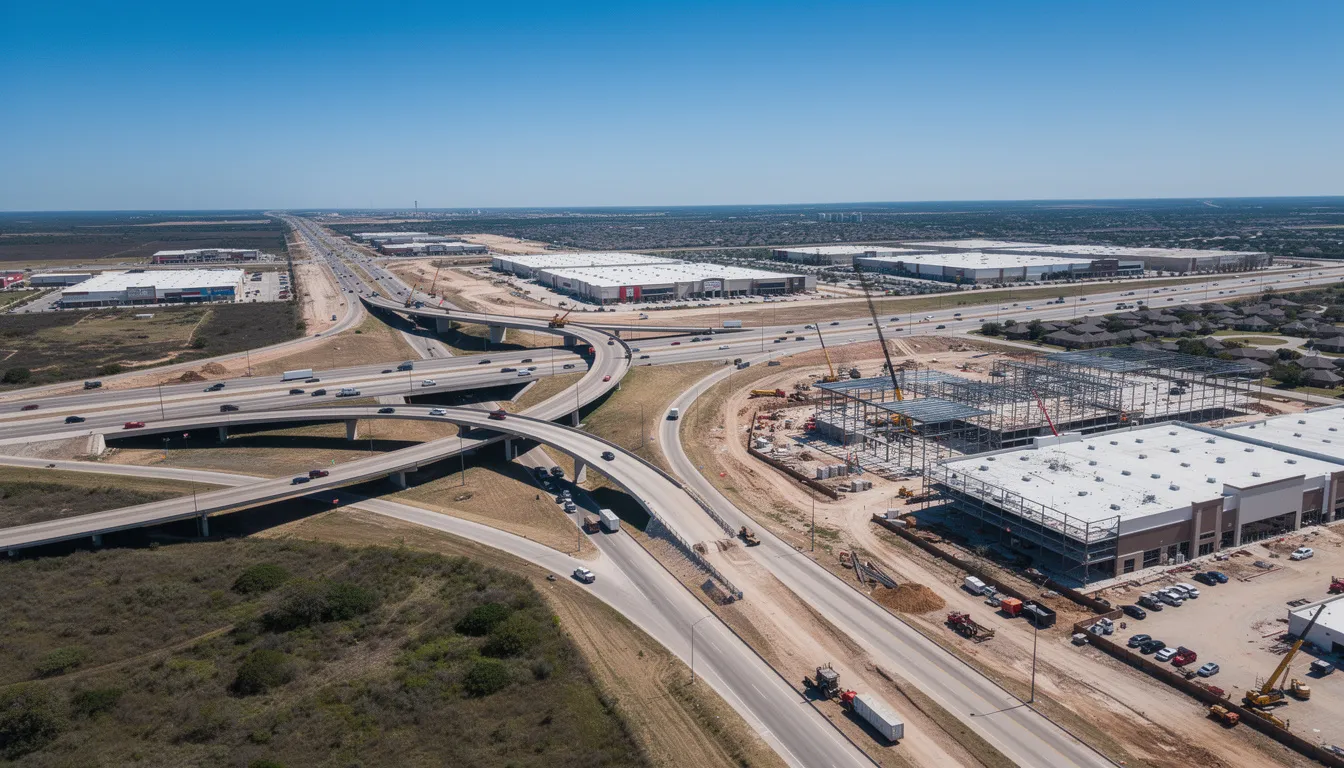
Texas construction volume continues to be supported by federal infrastructure programs, state transportation funding, ongoing corporate relocation activity, and population growth. Many commercial contractors now operate with multi-year backlogs that were once considered peak-cycle volume. Executive leaders are now expected to manage portfolio risk at unprecedented scale.
Infrastructure and Public Works Expansion
Transportation and civil infrastructure remain foundational to the Texas construction economy. Highway corridor expansions, bridge replacement programs, flood mitigation systems, aviation improvements, port modernization projects, and water infrastructure upgrades require enterprise-level oversight. These programs commonly extend across multiple counties and involve layered stakeholder coordination.
Federal Infrastructure Investment and Jobs Act funding continues to flow into active Texas projects, increasing compliance obligations and public accountability. Vice Presidents of Operations and Regional Directors now manage not just schedule and margin, but also federal reporting, environmental controls, disadvantaged business participation requirements, and public engagement risk.
For many contractors, this level of complexity has accelerated the move toward national executive recruitment rather than local promotion alone. Leadership experience tied to federal programs now commands premium compensation and long-term incentive structures.
Data Center and Digital Infrastructure Construction

Texas has rapidly become one of the nation’s most active data center construction markets. Hyperscale campuses, enterprise cloud facilities, and edge computing installations continue to expand across Dallas-Fort Worth, Austin, and Central Texas industrial corridors.
Data center construction requires executive leaders who understand mission-critical delivery, power and cooling redundancy, commissioning protocols, cybersecurity controls, and ultra-compressed schedules. These projects expose contractors to heightened technical and financial risk. As a result, executives with proven data center delivery experience are heavily recruited nationwide.
Hiring patterns in this sector mirror the same forces shaping Florida’s digital infrastructure expansion outlined in Florida Data Center Construction Hiring 2026reinforcing how hyperscale development is now driving national executive competition.
Energy, Industrial, and Advanced Manufacturing Growth
Texas continues to lead in traditional energy infrastructure while simultaneously expanding renewable energy portfolios. Oil and gas facilities, LNG terminals, petrochemical plants, wind farms, battery storage installations, and large-scale solar projects all require specialized construction leadership.
Advanced manufacturing growth adds further pressure. Semiconductor fabrication plants, automotive facilities, aerospace production centers, and specialty industrial manufacturing sites require executives with deep process-driven construction experience, regulatory compliance expertise, and integrated project controls.
Industrial construction executives operate under elevated safety exposure, environmental liability, and capital intensity. Compensation structures in this sector frequently place heavier weight on incentive-based performance tied to incident-free delivery, commissioning success, and regulatory clearance milestones.
Commercial Vertical Construction and Mixed-Use Development
Traditional commercial construction remains one of the most stable sources of executive hiring demand in Texas. Healthcare systems continue hospital and outpatient expansion programs. Higher education campuses operate in sustained growth cycles. Logistics distribution centers expand alongside e-commerce activity, port development, and population migration.
Large mixed-use developments combining residential, office, hospitality, and retail components continue reshaping urban cores across Texas metropolitan regions. These master-planned projects require executives who understand phasing strategies, municipal coordination, utility sequencing, and long-term capital deployment.
Market leaders responsible for these portfolios often benchmark executive pay against project management and superintendent wage inflation described in How Much Do Construction Superintendents Make? to ensure management layers remain structurally aligned.
Why the Texas Executive Market Remains Structurally Short of Talent
The executive shortage in Texas construction is not simply cyclical. It is structural. The current leadership pool was developed to operate in smaller-scale, single-sector growth environments. Today’s market demands leaders who can manage diversified risk across infrastructure, industrial, digital, and commercial portfolios at the same time.
Internal succession planning lagged expansion across much of the state. Many firms scaled revenue and backlog faster than leadership pipelines could mature. As a result, external recruitment now remains the primary mechanism for filling Vice President, Director, Project Executive, and C-suite roles.
Cross-industry competition intensifies this scarcity. Technology companies, energy producers, aerospace manufacturers, and multinational developers compete directly with contractors for the same executive profiles. These organizations often move faster on compensation and offer equity participation structures that traditional contractors rarely match.
Texas contractors now recruit at a national level for leadership talent. Local recruiting strategies alone no longer supply sufficient executive volume for firms managing nine-figure and billion-dollar portfolios.
Implications for Texas Hiring Managers
For hiring managers, the Texas executive market now behaves more like a federal procurement environment than a regional labor market. Executive recruitment must align with long-term value creation, not just vacancy replacement.
- Compensation packages must reflect enterprise risk exposure and competitive national benchmarks.
- Search timelines extend when firms rely on outdated compensation ranges or slow consensus-driven hiring models.
- Leadership instability at the vice president and project executive level now carries direct backlog and client retention risk.
Many contractors are responding by shifting toward continuous executive recruiting pipelines rather than episodic hiring cycles. This mindset is increasingly aligned with the national recruiting model described in Why Construction Executive Recruiters Are the Key to Building Dream Teams.
Implications for Executive Candidates

For construction executives, Texas offers one of the strongest long-term earning and career acceleration markets in the country. Leaders with multi-sector experience, national client relationships, and complex delivery exposure now hold measurable negotiating leverage.
Career mobility across Texas is higher than in most states. Executives move between commercial, industrial, data center, and infrastructure firms without relocating across the country. This flexibility strengthens long-term earning power and career trajectory.
Long-range leadership pay trends in Texas also mirror national workforce dynamics outlined in Construction Workers in 2025 and The True Worth of A-Playersreinforcing how executive scarcity now shapes compensation across every layer of the construction workforce.
What This Means Heading Into 2026
Texas enters 2026 as a structurally high-demand executive construction market. Growth is no longer isolated to any one sector. Infrastructure, digital facilities, industrial manufacturing, energy transition, and urban commercial development are all expanding simultaneously.
This convergence keeps leadership compensation under upward pressure and continues to favor firms that adapt recruitment strategies to national standards. Companies that align compensation, authority, and long-term leadership opportunity move fastest in securing high-impact executives.
For Texas contractors operating at scale, executive recruitment is no longer an occasional exercise. It is now a permanent strategic function tied directly to backlog defense, margin protection, client confidence, and long-term enterprise growth.
High-Demand Executive Roles in the Texas Construction Market
Texas construction firms are prioritizing executive roles that directly control revenue protection, backlog conversion, and delivery performance. These positions carry direct enterprise risk and shape long-term client retention, regional expansion, and market positioning. Demand is strongest for leaders who can operate across multiple Texas metros while managing complex portfolios tied to infrastructure, data centers, industrial programs, and large commercial developments.
Compensation for these roles continues to move upward in parallel with the salary pressure affecting downstream leadership positions such as Project ManagersSuperintendentsand General Foremen. As frontline leadership wages rise, executive compensation structure must adjust to maintain management leverage and retention stability.
Chief Executive Officer and President

CEOs and Presidents serve as the financial and operational stewards of Texas construction firms. Their decisions define market strategy, sector exposure, capital deployment, and long-term enterprise value. In the current market, this role increasingly carries responsibility for multi-market Texas portfolios rather than single-city operations.
- Typical revenue oversight: $50M to $500M+ annually across commercial, industrial, or infrastructure portfolios.
- Primary focus areas: enterprise strategy, capital structure, executive succession planning, and major client relationships.
- Background profile: progressive advancement through project management, operations, and regional executive leadership.
Compensation at this level blends base salary with enterprise performance incentives, profit sharing, and long-term value participation. CEOs and Presidents now benchmark compensation against national contractor leadership rather than local market peers.
Vice President of Operations and Regional Directors
Vice Presidents of Operations and Regional Directors translate enterprise strategy into execution. They manage project portfolios, stabilize regional workforces, and protect margin and safety performance across multiple operating units.
- Typical portfolio scope: $100M+ in annual project volume with responsibility for dozens of project managers and superintendents.
- Primary focus areas: workforce allocation, forecasting, backlog health, safety compliance, and schedule performance.
- Background profile: senior project executive or operations leader with deep delivery accountability.
These leaders are also measured by their ability to develop future executives. Firms without internal leadership benches increasingly struggle at this level, which compounds long-term executive scarcity.
Vice President of Preconstruction and Business Development
Vice Presidents of Preconstruction and Business Development control the front-end revenue engine. They decide which pursuits move forward, how risk is structured, and how firms position themselves against competitors on complex programs.
- Typical scope: oversight of estimating, preconstruction services, pursuit strategy, and key client engagement.
- Primary focus areas: pursuit hit rate, backlog quality, client pipeline expansion, and relationship depth.
- Background profile: senior estimator, project executive, or market development leader with strong owner connections.
In high-density Texas markets, winning multi-project programs often depends on the credibility and network depth of these executives rather than price alone.
Senior Project Executive and Division Leaders
Senior Project Executives and Division Leaders operate at the intersection of strategy and field execution. These leaders manage multiple project teams while maintaining accountability for cost, schedule, and subcontractor performance across entire market segments.
- Typical scope: oversight of several major projects simultaneously, often exceeding $200M in combined value.
- Primary focus areas: delivery consistency, subcontractor stability, client satisfaction, and dispute mitigation.
- Background profile: seasoned project manager or superintendent with strong operational credibility.
These roles often serve as the final proving ground for future Vice Presidents and regional executives. Firms that fail to stabilize leadership at this tier frequently lose their internal promotion bench.
Why These Roles Drive the Texas Executive Hiring Market
Texas construction firms prioritize these positions because they directly influence:
- Revenue and margin protection across multi-market portfolios
- Client retention on multi-year programs
- Labor force stability and safety outcomes
- Expansion into new sectors such as data centers and industrial manufacturing
- Succession readiness for enterprise leadership
This same executive hierarchy also shapes long-term career mobility across the workforce, as outlined in Construction Careers 2025. Without clear progression through these leadership tiers, firms struggle to retain high-potential managers who seek advancement.
For hiring managers, delay at any one of these executive levels creates a domino effect across projects, regions, and client programs. For executive candidates, these roles represent the primary gateways to long-term earning power, equity participation, and enterprise influence within the Texas construction market.
Why Construction Executives Are Relocating to Texas in Record Numbers
Texas has become one of the top relocation destinations for senior construction leaders in the United States. Executives moving from California, New York, Illinois, and the Northeast are driven by a combination of high compensation potential, business-friendly regulation, deep project pipelines, and long-term career stability.
For executives earning six-figure and seven-figure compensation packages, the absence of a state income tax alone creates a meaningful boost to net earnings. When paired with active megaproject pipelines and consistent commercial demand, Texas now delivers one of the strongest risk-to-reward leadership markets in U.S. construction.
Higher Net Compensation Without Coastal Tax Burdens
Texas has no personal state income tax. For executives earning $200,000 to $400,000 in base salary, this alone often translates into tens of thousands of dollars in additional annual net income compared to high-tax coastal states.
- Higher take-home pay without altering gross compensation
- More flexibility in bonus and incentive structuring
- Improved long-term wealth accumulation for senior leaders
This tax advantage amplifies the salary growth outlined in How Inflation Pushed Construction Salaries Higherespecially for enterprise-level leaders whose compensation includes bonuses and profit participation.
Unmatched Project Variety Across Multiple Sectors
Few states offer the same cross-sector project diversity that Texas provides. Executives can move between:
- Public infrastructure and transportation corridors
- Data center and digital infrastructure campuses
- Advanced manufacturing and industrial facilities
- Healthcare systems and higher education developments
- Large mixed-use commercial developments
This diversity allows executives to build multi-sector portfolios without leaving the state. Long-term career resilience improves when leaders can pivot between sectors as market cycles shift.
Stronger Long-Term Job Security
Texas continues to benefit from population growth, corporate relocations, and federal infrastructure investment. These forces stabilize demand even during national slowdowns. For executives, this means fewer abrupt career disruptions tied to regional downturns.
Leadership mobility outlined in Construction Careers 2025 shows that executives in high-growth states like Texas experience faster progression and longer active earning windows.
Operational Freedom and Accelerated Permitting
Texas maintains one of the most development-friendly regulatory environments in the U.S. Compared to heavily regulated coastal states, executives in Texas face fewer permitting delays, lower entitlement risk, and faster mobilization cycles.
- Shorter entitlement timeframes on large developments
- Streamlined inspection and compliance processes
- More predictable project schedules for contractors and owners
For executives measured on schedule performance and capital efficiency, this regulatory predictability directly improves performance outcomes and incentive compensation reliability.
Relocation Packages and Executive Mobility Incentives
To attract top leadership talent, many Texas contractors and national builders now offer structured relocation packages for executive hires. These commonly range from $40,000 to $100,000+ for senior leadership roles, depending on scope and company size, and can include:
- Lump-sum relocation stipends
- Temporary housing support
- Spousal employment assistance
- Cost-of-living transition subsidies
Relocation support is increasingly treated as a standard closing tool for executive searches rather than a discretionary benefit.
What This Means for Texas Hiring Managers
Texas firms are no longer competing only inside the state for leadership talent. They are now competing nationally against coastal builders, global engineering firms, and multinational developers. Compensation, authority, and project quality must align with national executive expectations.
Many firms now align recruitment strategy with the national leadership recruitment frameworks outlined in Why Construction Executive Recruiters Are the Key to Building Dream Teams rather than relying exclusively on local referral networks.
For candidates, the Texas relocation pipeline represents one of the strongest career acceleration channels in construction today. For hiring managers, it represents both the greatest opportunity and the most intense form of executive competition in the market.
Why Texas Construction Firms Continue to Struggle with Executive Hiring
Texas construction contractors are winning work at historic volume, but many are losing the executive hiring battle behind the scenes. The leadership shortage is no longer driven only by market growth. It is driven by structural recruiting failures, outdated compensation strategy, and limited internal succession planning.
Even firms with strong backlogs, modern equipment fleets, and repeat clients now report executive search cycles that stretch toward four to six months when hiring is managed reactively. These extended vacancies amplify operational risk, weaken client confidence, and place extraordinary pressure on remaining leadership teams.

Reactive Succession Planning at the Executive Level
Many Texas contractors continue to approach executive transitions reactively. Leadership development pipelines are often informal, unstructured, or entirely absent. As a result, when Vice Presidents, Project Executives, or Regional Directors exit, firms are forced into emergency external searches.
Emergency searches eliminate leverage. Firms move under pressure, often paying premium compensation without adequate talent benchmarking or cultural vetting. This increases long-term turnover risk and destabilizes leadership continuity.
Outdated Compensation Strategy
Executive pay structures at many Texas firms still reflect pre-2020 market conditions. These ranges fail to account for escalated delivery risk, expanded portfolio scope, and inflation-driven wage pressure across every layer of the workforce.
Downstream salary increases for Project ManagersSuperintendentsand General Foremen have already forced leadership compensation upward. Firms that fail to adjust executive pay accordingly lose candidates late in the hiring process.
Inefficient Executive Hiring Processes
Hiring cycles for Texas executive roles often suffer from excessive committee layers, delayed interview feedback, and slow consensus-driven decision making. The most qualified executives typically maintain multiple active opportunities and rarely wait through prolonged evaluation timelines.
- Slow interview scheduling
- Unclear decision authority
- Extended offer approval cycles
- Delayed compensation authorization
Each layer of delay increases the probability that a preferred candidate accepts a competing offer before negotiations conclude.
Cross-Industry Competition for Leadership Talent
Texas contractors now compete directly with technology firms, energy producers, logistics companies, aerospace manufacturers, and real estate developers for executive leadership. These organizations often move faster on compensation, equity participation, and authority.
This competition is amplified in data center, industrial manufacturing, and infrastructure sectors where capital deployment speed and technical specialization create heightened leadership demand.
Limited Executive Recruitment Expertise In-House
Many Texas contractors rely on internal HR teams designed for craft, project management, and support hiring rather than enterprise-level executive recruitment. These teams often lack access to passive executive candidates who are not actively applying for roles.
This gap explains why many firms increasingly rely on national search partners as outlined in Why Construction Executive Recruiters Are the Key to Building Dream Teams. Executive search firms maintain pre-established relationships with high-performing leadership candidates and can compress hiring timelines under tight market conditions.
Operational Strain from Broader Labor Shortages
The executive shortage does not exist in isolation. Labor constraints at the field and project leadership levels intensify pressure upward. Chronic shortages of General Foremen, Assistant Superintendents, and experienced superintendents force executives into daily tactical firefighting rather than strategic leadership.
This operational overload increases burnout risk at the executive level and accelerates turnover during peak expansion cycles.
What This Means for Texas Hiring Managers
Texas contractors that continue to treat executive hiring as an episodic HR transaction rather than a permanent strategic function will remain structurally exposed. Firms that fail to stabilize leadership benches experience recurring delivery volatility, client erosion, and delayed regional expansion.
The firms that break this cycle invest proactively in succession planning, competitive compensation benchmarking, and continuous executive recruiting partnerships. These firms move faster, retain leaders longer, and maintain continuity across multi-year construction programs.
Texas Executive Hiring Projections and Market Trends Through 2026
Texas enters 2026 with one of the most aggressive executive hiring outlooks in the construction industry. Infrastructure funding, data center expansion, industrial reshoring, and sustained commercial development continue to generate demand for senior leadership even as some national markets soften. For most Texas contractors, executive hiring is no longer a growth-only function. It is now a stability and risk-management requirement.
Hiring demand is strongest across metro Dallas-Fort Worth, Houston, Austin, and San Antonio, where backlog volume and project size continue to scale. Secondary markets tied to logistics, manufacturing, and energy infrastructure are also generating sustained leadership demand.
Infrastructure and Public Funding Will Continue to Drive Executive Growth
Federal infrastructure funding remains a long-duration force in Texas. Highway corridors, bridge replacements, port modernization, aviation improvements, and water systems upgrades extend well into multi-year delivery programs. These programs require long-term executive continuity to protect schedule reliability, safety performance, and public accountability.
Executives with experience navigating federally funded programs, disadvantaged business requirements, and environmental compliance will remain in high demand. These leaders often command incentive structures tied to multi-year performance rather than single-year results.
Data Center Construction Will Keep Expanding Leadership Demand
Hyperscale and enterprise data center campuses continue to expand across Texas due to power availability, land scale, and corporate tax strategy. Data center work remains one of the most leadership-intensive construction sectors due to compressed schedules, capital intensity, and technical delivery risk.
Texas hiring patterns in this segment closely mirror national trends illustrated by Florida’s hyperscale market outlined in Florida Data Center Construction Hiring 2026reinforcing how digital infrastructure continues to reshape executive demand nationally.
Industrial and Advanced Manufacturing Will Remain a Core Leadership Driver
Advanced manufacturing continues to expand across Texas as companies reshore production and invest in U.S.-based supply chains. Semiconductor fabrication, automotive production, battery plants, aerospace manufacturing, and petrochemical expansion all require executives with process-driven delivery experience.
These projects often involve strict regulatory oversight, elevated safety exposure, and complex commissioning phases. As a result, executives with industrial backgrounds are increasingly being cross-recruited into adjacent infrastructure and energy programs.
Commercial Construction Will Stay Resilient in High-Growth Metros
Healthcare expansion, higher education growth, logistics centers, and mixed-use urban development remain resilient in Texas even as interest rate volatility affects some private investment cycles. Executives who can manage risk across both public and private portfolios will continue to hold leverage in hiring negotiations.
Technology and Data-Driven Leadership Expectations
Texas hiring managers increasingly prioritize executives who can leverage project controls platforms, forecasting tools, and performance analytics to improve portfolio outcomes. Leaders who understand how to integrate data across estimating, scheduling, and cost control now hold measurable advantage in both hiring and compensation negotiations.
This trend ties directly into the career progression pathways described in Construction Careers 2025where leaders who combine operational credibility with digital fluency advance faster and retain long-term enterprise relevance.
Executive Turnover Risk Will Remain Elevated
The combination of record backlog, national executive competition, and aging leadership benches keeps turnover risk elevated through 2026. Firms that delay succession planning, under-invest in new leaders, or fail to align compensation with modern Texas benchmarks will continue to experience repeated executive churn.
Turnover at this level now carries direct downstream risk to client retention, safety records, margin consistency, and multi-year project delivery.
What This Means for Texas Contractors Heading Into 2026
- Executive hiring must be treated as a continuous pipeline function rather than episodic recruitment.
- Compensation benchmarking should occur annually rather than only at vacancy points.
- Succession planning must extend at least two layers below each critical executive role.
- Leadership development programs are no longer optional in high-growth Texas markets.
Firms that adapt to these trends will stabilize leadership, reduce delivery volatility, and protect enterprise value during continued market expansion. Firms that do not will remain locked in repeated executive search cycles that weaken long-term competitiveness.
Strategies Texas Construction Firms Use to Attract and Retain Top Executive Talent
Winning executive talent in Texas now requires a structured, year-round strategy. Firms that rely on reactive hiring after a resignation or project win consistently lose candidates to faster, better-prepared competitors. The most stable contractors treat executive recruitment and retention as permanent business functions tied directly to backlog defense and enterprise growth.
Build Competitive Total Compensation, Not Just Higher Base Pay
Strong Texas contractors no longer compete on base salary alone. The most effective executive offers combine guaranteed earnings with upside tied directly to performance and enterprise value.
- Annual performance incentives tied to backlog growth, margin protection, and safety results
- Long-term incentive plans tied to multi-year project delivery and regional expansion
- Profit-sharing or equity participation for enterprise-impact roles
- Annual benchmarking against leadership ranges outlined in the 2025 to 2026 Construction Salary Guide
Compensation alignment is especially important when downstream leadership pay continues rising across roles such as Project ManagersSuperintendentsand General Foremen.
Shorten and Control the Executive Hiring Process
The fastest-growing Texas firms compress executive hiring timelines by removing unnecessary internal approval layers and pre-defining compensation authority before interviews begin.
- Single defined decision-maker with final approval authority
- Pre-set interview stages rather than open-ended interview loops
- Compensation authority confirmed before final interviews
- Clear communication cadence with candidates
Top executives rarely wait through prolonged, committee-driven hiring cycles. Firms that move with clarity close faster and retain bargaining leverage.
Invest Heavily in Executive Onboarding and Leadership Stability
Hiring alone does not secure long-term leadership. Firms that reduce executive turnover invest heavily in structured onboarding and post-hire support.
- Formal 90-day onboarding plans tied to backlog, client relationships, and internal systems
- Defined authority levels and performance metrics from day one
- Senior leadership mentors assigned during the first year
- Clear two- to three-year growth tracks aligned with regional expansion
Use Specialized Executive Search Partners When Needed
Many Texas contractors now combine internal recruiting with national executive search support for critical leadership roles. Specialized search firms maintain relationships with passive candidates who rarely apply directly.
This national recruiting model mirrors the approach outlined in Why Construction Executive Recruiters Are the Key to Building Dream Teamswhere speed, market intelligence, and existing candidate trust directly improve hire quality.
Offer Growth Authority, Not Just a Title
Executive candidates evaluate much more than compensation. The strongest Texas firms win talent by offering:
- Real authority to shape regional strategy
- Participation in market expansion decisions
- Access to capital and leadership resources
- Long-term succession visibility
Executives who see limited authority or unclear growth ceilings are far more likely to re-enter the market within two to three years.
How Can We Help You?
For Construction Professionals: If you are exploring executive or senior leadership roles in Texas, connect with The Birmingham Group’s construction recruiters or browse current executive and leadership construction jobs.
For Hiring Managers: If you need to stabilize or expand your leadership team, submit a confidential executive search request and we will help you secure proven leaders aligned with your backlog and growth strategy.
FAQs: Texas Construction Executive Hiring and Careers
What executive roles are most difficult to fill in Texas right now?
Vice Presidents of Operations, Project Executives, Regional Directors, and leaders with data center or industrial construction experience remain the hardest roles to fill due to multi-sector demand and national competition for this talent.
How long does it typically take to hire a construction executive in Texas?
Reactive searches often last several months, especially when firms have slow internal approval processes. Companies that define decision authority, benchmark compensation in advance, and maintain continuous recruiting pipelines are able to close executive hires significantly faster.
Do Texas executives typically relocate from other states?
Yes. Many senior leaders relocate from California, the Midwest, and the Northeast due to compensation leverage, tax advantages, and a deeper pipeline of complex projects available in Texas.
What matters most to executive candidates besides salary?
Beyond salary, construction executive candidates focus on real authority to influence strategy, clear growth and succession visibility, leadership culture, backlog quality, and long-term stability of the firm. Executives are more likely to stay when they have meaningful decision-making power and see a defined future with the organization.
For Texas-specific pay benchmarks alongside national comparison data, download TBG’s 2026 Construction Salary Surveyfree and updated for 2026.